Sr. Content Developer at Microsoft, working remotely in PA, TechBash conference organizer, former Microsoft MVP, Husband, Dad and Geek.
163764 stories
·
33 followers

Microsoft earnings preview: Employee buyouts, AI spending and a new financial scorecard

1 Share
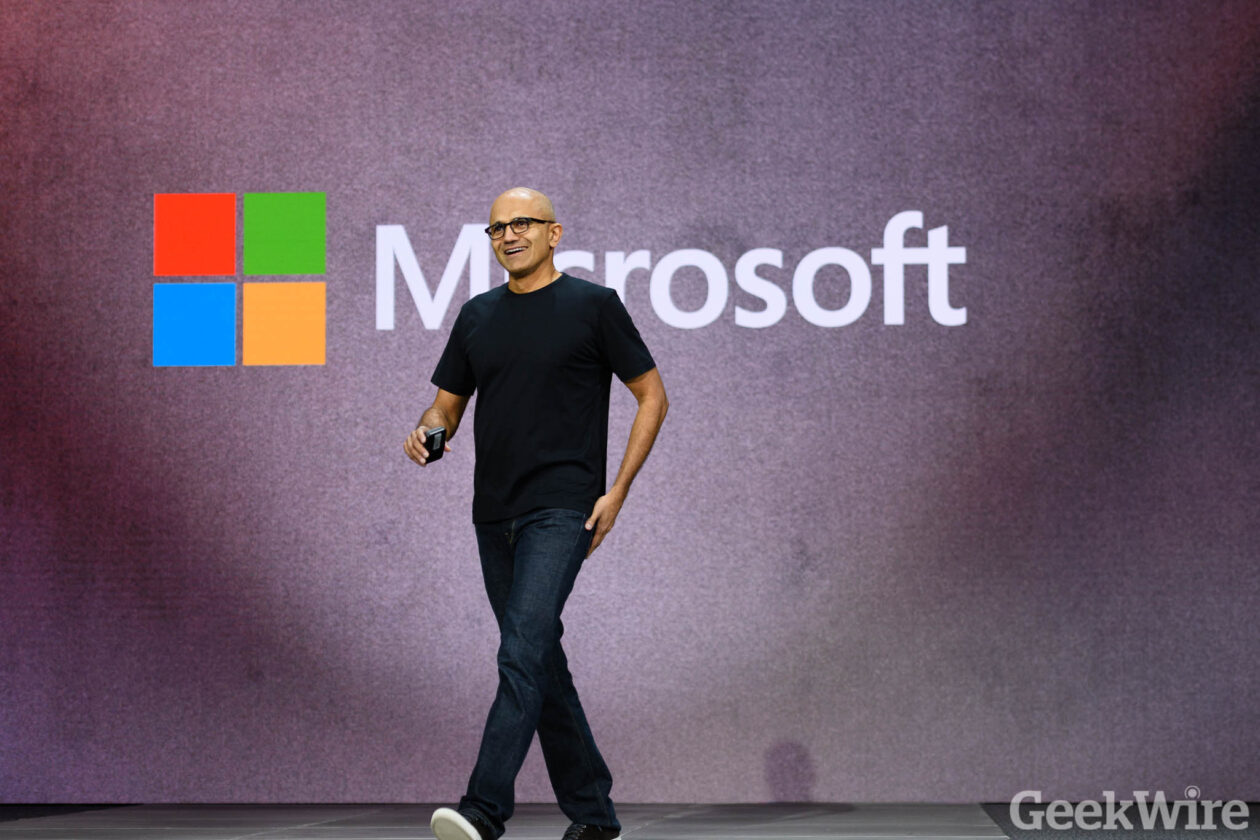
Satya Nadella walks across a stage in front of a large Microsoft logo.
Satya Nadella & Co. report quarterly earnings under a new financial structure Wednesday. (GeekWire File Photo / Kevin Lisota)

Microsoft’s earnings report Wednesday will come two days after the company offered buyouts to about 60,000 people, roughly a quarter of its employees. The call gives executives their first chance to say what the offer will cost, and to explain how it fits with the company’s long-term view of its workforce.

Whether or not they go into those details, it’s one of several issues to watch in Wednesday’s report, the first under Microsoft’s new reporting structure. Anthropic’s IPO filing on Monday adds another storyline, showing how much the Claude maker has agreed to spend on Microsoft’s cloud.

Coming into the report, Microsoft’s stock is near its high. Microsoft closed Monday at $532.60, about 2% below its record close of $543.45 on Oct. 13, after gaining roughly $1.4 trillion in market value since late June.

Here are the key numbers and issues heading into Microsoft’s results for the first quarter of its 2027 fiscal year, ended Sept. 30.

Core numbers: Analysts expect revenue of $90.75 billion, up nearly 17% from a year ago, and earnings of $4.72 per share, up 14%, according to Yahoo Finance. Microsoft’s own forecast was $89.85 billion to $90.95 billion, so Wall Street is looking for a result near the top of that range.

In July, Microsoft reported $90 billion in revenue for the June quarter, well above the $87.7 billion analysts expected.

A new scorecard: Microsoft announced in September that it would sort its business into two groups instead of the three it had used since 2015. This is the first quarter under the new setup.

The first, dubbed Agents and Infra, includes Azure, Microsoft 365, Dynamics, LinkedIn’s recruiting and sales tools, and server and productivity licensing. It brought in 81% of Microsoft’s revenue and 88% of its operating income in fiscal 2026, based on figures Microsoft recast under the new structure.

Microsoft expects Agents and Infra revenue of $75.15 billion to $75.75 billion this quarter, which would be growth of about 22% to 23%, by GeekWire’s calculation.

The other group, Devices and Consumer, includes Windows, Xbox and search advertising. Microsoft expects it to bring in $14.7 billion to $15.2 billion, down 5% to 8% from a year earlier.

Azure, in dollars: Microsoft started disclosing Azure’s annual revenue last year, when it passed $75 billion, and topped $100 billion in fiscal 2026. Starting this quarter, it reports the figure every quarter. It also changed what counts as Azure: GitHub’s cloud business and Security Copilot now fall under Microsoft 365, and its healthcare cloud moved to a new industry unit.

Counted that way, Azure brought in $29.4 billion in the June quarter, up 42%. Microsoft expects growth of 44% to 45% this quarter, not counting currency fluctuations, which would put Azure at roughly $32 billion, by GeekWire’s calculation. That compares with the roughly 45% Microsoft projected in July, under the old definition.

Hitting that forecast may not be enough. Investors are looking for about 46%, BNP Paribas analyst Stefan Slowinski wrote in a note Monday. In January, Azure beat Microsoft’s own forecast and the stock still fell 10%, because investors had privately expected more.

“Azure moves the stock, but the read that matters is whether capacity is absorbed as fast as it lands,” wrote Dan Ives of Yorkville Ives in a note last week.

Capital spending: Microsoft expects capital expenditures of more than $50 billion for the quarter, which would be a record. That’s up from $41 billion in the June quarter and $34.9 billion a year earlier.

An accounting change reduces what Microsoft reports as capital spending, without reducing its planned investment. Microsoft now assumes its data center buildings will last 25 years instead of 15. As a result, more of its data center leases will be classified in a way that doesn’t count as capital spending, CFO Amy Hood said on the July earnings call.

That change alone lowered Microsoft’s capital spending estimate for calendar 2026 to about $175 billion, from the roughly $190 billion it projected in April. Hood said the company’s actual spending plans hadn’t changed.

Cloud margins: Microsoft Cloud gross margin came in at 65% last quarter, better than expected but down from a year earlier. Microsoft said it expects the figure to be relatively stable this quarter. It also expects operating margins to be roughly flat with a year ago.

Workforce: The new “voluntary exit” offer, announced Monday by Chief People Officer Amy Coleman, covers participating teams in the U.S., Canada, the U.K. and India. It has no age or tenure requirement and extends to some vice presidents. Employees have until the first week of December to decide, and Microsoft hasn’t said how much the offer will cost or when it will record the charge.

For the spring retirement program, Hood disclosed the cost on the April earnings call: about $900 million, with roughly $350 million in cost of revenue and $550 million in operating expenses. The charge showed up in the following quarter. About 30% of the 8,750 eligible employees accepted.

The new offer is less generous. It matches Microsoft’s standard severance, without the extended healthcare of the spring program, and the company expects a much smaller share of people to take it. But the pool of eligible employees is nearly seven times larger.

Microsoft says the offer doesn’t mean it needs fewer people. Coleman said in July that the company was studying whether to make voluntary exits a regular part of managing its workforce. It has told investors to expect operating margins roughly flat this quarter and down less than a point for the full fiscal year, even with record capital spending.

Nadella has addressed this before. In a July 2025 memo to employees, after Microsoft laid off about 15,000 people, he acknowledged the “uncertainty and seeming incongruence” of thriving financially while cutting jobs. “This is the enigma of success in an industry that has no franchise value,” he wrote.

In his annual shareholder letter last week, he focused on Microsoft’s spending on AI infrastructure. “Based on the demand we see and the efficiencies we are driving, I am confident in the long-term returns on our investments,” Nadella wrote. “We are building against a growing book of business tied to this secular shift.”

Microsoft had about 223,000 employees as of June 30, before it cut 4,800 jobs in July and more in September. The Information reported this month that Azure President Girish Bablani told leaders in his group to find ways to cut costs by at least 20%. Microsoft called the report inaccurate and said Azure leadership had not directed teams to develop cost-cutting plans.

Copilot: Microsoft said in July that businesses were paying for more than 30 million Microsoft 365 Copilot seats, up from 20 million in April. That’s still only about 7% of the more than 450 million commercial Microsoft 365 seats.

The bigger change is in how Microsoft charges for Copilot and its other AI tools. In July it added usage-based billing alongside per-seat pricing. It’s also pushing customers toward E7, a new premium bundle that includes Copilot. Microsoft expects Microsoft 365 commercial cloud revenue to grow about 17% this quarter, not counting currency swings, a number that now includes GitHub.

The BNP Paribas analyst Slowinski, who attended Microsoft’s Frontier Tour event in London last week, wrote that partners are seeing more customers roll out Copilot company-wide. Partners also told him that Microsoft now ties 35% of E7 sales incentives to how much customers use features like Cowork.

Anthropic and OpenAI: Anthropic’s S-1 filing shows the company has committed to spend at least $44.9 billion with Microsoft from November 2026 to May 2033, up from the $30 billion Azure commitment announced last November. That’s well below its minimum commitments to Amazon ($110 billion) and Google ($114.5 billion).

Microsoft agreed last year to invest up to $5 billion in Anthropic. Its results for the June quarter included a $3.2 billion gain on that investment.

OpenAI remains the bigger factor. Microsoft’s commercial remaining performance obligation (RPO), the measure of signed contracts it hasn’t yet delivered on, reached $678 billion last quarter, up 84% from a year earlier. Without OpenAI, the backlog grew 25%. OpenAI told investors its annualized revenue approached $50 billion at the end of September, The Information reported, lower than earlier reports of about $70 billion.

Windows: Microsoft expects revenue from Windows licenses sold to PC makers, along with its own devices, to fall a little more than 20%. Higher memory prices are making PCs more expensive, and PC makers are still working through extra inventory.

What’s next: Alphabet also reports Wednesday afternoon, and Amazon reports Thursday, setting up a side-by-side look at Azure, Google Cloud and AWS.

Anthropic is aiming to go public the week of Nov. 16, according to the Wall Street Journal.

Check back Wednesday afternoon for coverage.

Read the whole story
alvinashcraft
50 minutes ago
reply
Pennsylvania, USA
Share this story
Delete

Microsoft Adds 25 Languages to Azure AI Speech Transcription

1 Share
The LLM Speech 09-2026 update expands locale coverage and reports faster transcription through the existing Fast Transcription API.
Read the whole story
alvinashcraft
51 minutes ago
reply
Pennsylvania, USA
Share this story
Delete

In an age of AI, deciding what to trust is a foundational skill. Here’s how we’re helping educators teach it.

1 Share

Launching the expanded AI Classroom Toolkit with Cyberlite during Global Media and Information Literacy Week 

AI is opening new pathways to information, giving people faster access to answers, ideas, and knowledge. At the same time, it’s making it harder to know whether the content we see is authentic. 

Companies that build AI have a responsibility to make it reliable and trustworthy, and that responsibility doesn’t shift to the people who use it. But AI is already shaping how people search, learn, and encounter information. Helping people navigate that reality means building media and AI literacy (MAIL): the judgment to decide whether and how to use AI and what information to trust. These skills are as foundational as AI safety, and educators are asking for help teaching them. 

That’s why, during Global Media and Information Literacy Week, we’re launching the expanded AI Classroom Toolkit: Unlocking Generative AI Safely and Responsibly, created with the online safety organization Cyberlite. It’s part of Microsoft’s broader commitment to make sure AI strengthens human thinking rather than replaces it. It also reflects Microsoft’s focus on education and empowerment, a core pillar of our Safe Participation Framework. 

Title slide: "Classroom Toolkit – Unlocking Generative AI Safely and Responsibly, 2026 Edition," with Microsoft and Cyberlite logos.

What’s new in the AI Classroom Toolkit

The expanded toolkit adds a deeper focus on critical thinking, verification, and media and AI literacy, helping students judge AI outputs and make informed decisions about what to trust online. Together with the original modules, it’s now a single, classroom-ready resource that covers the core of AI safety and literacy. Realistic, scenario-based lessons and activities help students practice these skills in situations they may encounter online: 

  • The Climate Campaign: Gina enters an online challenge to make a campaign for a cause she cares about and finds that some winning entries use AI to show events that never happened. Students sort a feed of real and AI-made posts and practice lateral reading. The lesson: whether a post was made with AI doesn’t decide whether it’s trustworthy. What it claims, and who is behind it, does. 
  • The Helpful Bot: Alex creates an AI help bot inside his online game, then catches it inventing details and collecting players’ personal information. Students learn why AI can get things wrong, how to trace claims to reliable sources, and why they’re responsible for AI-generated content they act on or share. 
  • What Kind of AI User Are You?: An interactive quiz, hosted by Cyberlite, helps students identify their AI habits, strengths, and potential blind spots, and gives them an AI Type to reflect on and discuss. 

“When we created the first Classroom Toolkit: Unlocking Generative AI Safely and Responsibly with Microsoft in 2023, most of the conversation was about using AI safely. Today, the questions young people ask about AI have grown sharper and more personal, like what to believe online or how far to trust a chatbot’s answer,” said Michelle Yao, cofounder of Cyberlite. 

The toolkit also reflects what young people in our co-design sessions with Cyberlite told us: they want to learn by doing, through games, real-life scenarios, and peer discussion. Teachers don’t need to be AI experts, and students don’t need an AI tool in hand to start. 

That approach builds on the reach and results of the original toolkit. Since 2023, the first version has reached educators in 10 countries and 11 languages, including through government and partner learning platforms. In South Korea, 93% of participating educators reported improved knowledge and understanding of ethical issues, privacy, and bias related to AI. 

“Our hope is that every student leaves a little surer of their own judgment, and that everyone feels more confident deciding how AI fits into their lives,” said Yao. 

Section 2 title slide: "Gina's Fight for the Ocean," with an illustration of a young woman wearing a "Skip Straws" T-shirt.

Literacy works alongside product design and policy

Education is one part of the equation. Our commitment to media and AI literacy also shows up in how we design products and the policies we support.  

Last month, we set out five principles for AI in education, including “AI designed to support students’ learning, not replace their thinking.” We also committed to enforceable privacy, safety, and transparency protections for qualifying educational AI products in US school districts. These protections help schools and families understand how these tools work and the controls available to them. 

Media and AI literacy is now a global priority

The Organisation for Economic Co-operation and Development has released a framework for a MAIL assessment beginning in 2029. As part of its Programme for International Student Assessment (PISA), it will examine how students reflect on, analyze, and evaluate information, including AI-generated information. This week in New Delhi, UNESCO is also launching an AI extension of its “Think Critically, Click Wisely” global curriculum, which Microsoft advised on. 

This growing global focus makes the need for support urgent—educators want help, and many aren’t getting it. In Microsoft’s 2026 AI in Education report, 53% of educators and 77% of students say they haven’t had AI training.  

Closing this skills gap matters beyond the classroom. Healthy societies depend on a shared basis of facts, informed public debate, and confident civic participation. As authenticity gets harder to judge, there’s a risk that people start doubting everything, creating what the Digital Inquiry Group calls a “dangerous declaration of permanent uncertainty.” MAIL offers a way through. It builds the confidence to decide what to trust. 

Media and AI literacy for every age

Across Microsoft, we’re helping people build these skills wherever they learn and find information: 

  • In classrooms: Students debate whether to accept, question, or rework an AI tool’s answers in an AI and Critical Thinking lesson from The Economist Educational Foundation, supported by Microsoft. Available alongside other media literacy lessons in Microsoft Learning Zone, the lesson has reached students in 116 countries. 
  • For content creators: UNESCO, with Microsoft’s support, is developing resources to help creator associations train their members in MAIL and is testing them with creators in Nairobi this week.  
  • In our products: Search Progress, built with input from the Digital Inquiry Group, turns research assignments into source-checking practice in Microsoft Teams for Education. 

What’s next 

Through Microsoft Elevate for Educators and local partners, we’ll bring the AI Classroom Toolkit to new audiences, with more languages and localized content rolling out through 2027. We’ll keep evolving it as technology and educators’ needs change. 

Explore the toolkit and supporting resources for educators today.  

AI will keep changing how people find information and the content they encounter. Our goal is to help people meet that change with confident, informed judgment about the AI they use and the information they trust so they can fully take part in civic and democratic life. 

The post In an age of AI, deciding what to trust is a foundational skill. Here’s how we’re helping educators teach it. appeared first on Microsoft On the Issues.

Read the whole story
alvinashcraft
51 minutes ago
reply
Pennsylvania, USA
Share this story
Delete

#502 Introducing chameleon-rs

1 Share
Topics covered in this episode:
Watch on YouTube

About the show

Connect with the hosts

Calvin #1: PHP wasn’t the only problem last week

  • Three security incidents in one week, each at a different layer: CA trust (eMudhra), the release pipeline (LiteLLM) and a C decoder (Brotli). All three have fixes released.
  • eMudhra CA: the keys of a compromised eMudhra intermediate CA are now distrusted by CPython. 3.15.1, 3.14.9 and 3.13.17 shipped Oct 21. 3.15.2, 3.14.10, 3.13.18, 3.12.16 and 3.11.18 followed Oct 26 (CVE-2026-115557) and also fix a tarfile filter bypass. Python's post says pip operations are safe even before pip is upgraded.
  • eMudhra, tooling: pip 26.2.2 bundles certifi 2026.10.19, which removes the root. uv 0.13.4 (GHSA-hq85-5cpj-mr62) and 0.13.5 (rustls-webpki 0.103.16) are the uv fixes. After upgrading uv, run uv python upgrade. Existing venvs need pip upgraded by hand, and the 3.9 and 3.10 builds still bundle a pip that trusts the root.
    • Anyone holding those intermediate keys can mint certificates for any domain that an unpatched client will accept as valid.
    • That enables man-in-the-middle attacks: reading or altering HTTPS traffic without a certificate warning.
    • The risk is highest where the attacker can sit on the network path, such as hostile Wi-Fi, a compromised router or ISP, or a cloud network position.
    • For Python specifically, the exposed traffic would be package downloads from PyPI, API calls with credentials or tokens, and webhooks. A tampered package download is the worst case.
    • Containers and old venvs that nobody rebuilds are where this lingers. uv says its Python 3.9 and 3.10 builds still bundle a pip that trusts the root, and existing venvs don't pick up the fix automatically.
  • LiteLLM 1.107.0: malicious wheels hit PyPI on Oct 21. All seven wheels were live from about 11:40 to 13:23 UTC, with roughly 49k downloads. The Docker images were also infected. It's the second LiteLLM compromise this year, after 1.82.7 and 1.82.8 in March.
  • LiteLLM payload: cook.pth runs on every Python start, so nothing has to import litellm. It steals SSH, cloud, browser, CI and AI-tool credentials, and an hourly loader runs remote code. The clean pin is litellm==1.106.4. Kill the loader first, rebuild rather than repair, then rotate everything the host could reach.
  • LiteLLM root cause: a master key committed to a public repo on May 27 was never revoked. On Oct 10 it yielded an org owner's GitHub CLI token. The attacker then changed the trusted release workflow to build from a lookalike Berri-AI/litellm repo. BerriAI's first explanation (tokens in logs) was wrong, and the Oct 23 report supersedes it.
  • Broccoli2Shell: CVE-2026-111497 is an out-of-bounds write in Google's Brotli C decoder. It affects the Python Brotli and brotlicffi packages 1.0.3 through 1.2.0(.x). Upgrade to Brotli 1.2.1 or brotlicffi 1.2.1.0. The CVE was published Oct 22 and rated 9.2 Critical by GitHub.
  • Broccoli2Shell workaround: if you can't upgrade, uninstall both packages. urllib3, requests and aiohttp then fall back to gzip and deflate. Also reject Content-Encoding: br request bodies at the proxy or WAF. Sources
  • https://blog.python.org/2026/10/python-3152-31410-31318-31216-31118/
  • https://www.stepsecurity.io/blog/litellm-1-107-0-compromised-pypi-backdoored-wheels-credential-stealer
  • https://broccoli2shell.com/

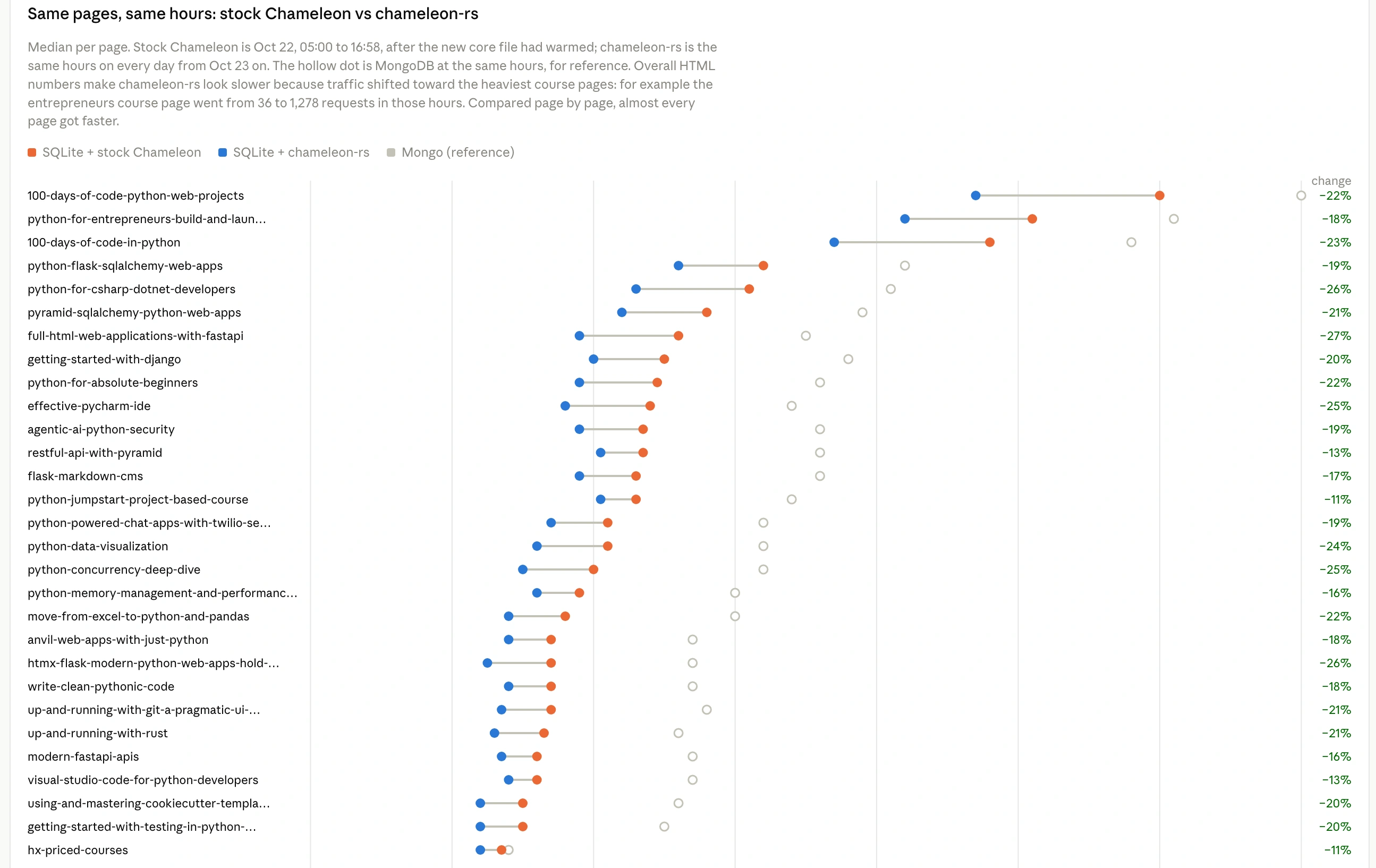
Michael #2: chameleon-rs

Calvin #3: Bringing uv and ty together

  • Status: Astral (Sara Sklenka, Oct 13) announced "an experimental integration between uv and ty, available in preview." They ask for feedback, and say "in parallel, we're continuing toward ty's stable release."
  • uv check: a new uv command that prepares the project environment, installs dependencies and runs ty. Flags are --package [HTML_REMOVED], --all-packages and --script example.py. Ruff support is planned, so lint and type check would run in one command.
  • Lockfile pinning: uv check uses the ty version recorded in your lockfile. Developers and CI therefore share one ty version without separate pins.
  • PEP 723 scripts: ty reads inline script metadata and uses uv to build an environment per script. Each script is checked against its own declared dependencies, even when they differ from the project's. In the editor, saving a script syncs it with uv.
  • Enabling it: running uv check turns it on automatically. In VS Code, install the astral-sh.ty extension and set "ty.experimental.useUv": "on". On the command line, run TY_UV=scripts ty check.
  • Opt-in: the post says automatic environment setup "is currently opt-in" because installing dependencies can execute third-party code. Astral plans to enable script support by default over time, and automatic setup for standard projects.
  • Under the hood: it's powered by uv workspace metadata. uv 0.13.6 (Oct 26) changed that preview output to nest each module's owners in an object, so anything parsing the old flat structure breaks.
  • Versions: it needs uv 0.12.3+ and ty 0.0.76+. Current releases are past both (uv 0.13.6, ty 0.0.92 on Oct 26), though I couldn't confirm 0.0.76's exact date.
  • Next: Astral says it's working on checks that combine uv's dependency knowledge with ty's code analysis, such as detecting unused dependencies.
  • Also credit to listener Sky Kasko. :)

Michael #4: Stlite runs Streamlit apps entirely in the browser

Streamlit is a very unique way to create data-driven dashboards. Stlite is a WebAssembly port of Streamlit built on Pyodide, so a Streamlit app runs completely in the visitor's browser with no Python server behind it. It ships as three packages (@stlite/browser for web pages, @stlite/desktop for offline desktop apps, @stlite/react for embedding in React), plus Stlite Sharing, a hosted editor for trying apps online. The project has been active since 2022 and is now at 0.85.1 with sponsorship from Streamlit/Snowflake and TestMu AI.

  • A Streamlit app becomes static files you can host anywhere, the same story JupyterLite tells for notebooks.
  • Deployment shrinks to a script tag or a single HTML file; the server only serves static assets and never runs Python.
  • It patches requests and urllib through pyodide-http and supports pyfetch, so most existing HTTP code keeps working.
  • Real limitations: time.sleep is a no-op in favor of asyncio.sleep, asyncio.run breaks, and packages with unported binary extensions cannot install.
  • Files default to ephemeral memory, but IDBFS mountpoints persist data across reloads in the browser's IndexedDB.
  • A SharedWorker mode lets multiple apps share one Python runtime to cut memory, at the cost of shared state between apps.
  • The @stlite/desktop bundler turns an app into an offline desktop executable, demonstrated converting Streamlit apps to .exe files.

Extras

Calvin:

Joke: captcha: too real!


Download audio: https://pythonbytes.fm/episodes/download/502/introducing-chameleon-rs.mp3
Read the whole story
alvinashcraft
51 minutes ago
reply
Pennsylvania, USA
Share this story
Delete

Coffee and Open Source Conversation - Golnaz Alibeigi

1 Share
From: Isaac Levin
Duration: 0:00
Views: 0

Golnaz Alibeigi runs DevRel Studios at Microsoft and has spent 15 years producing video content for developers, from Channel 9 to Microsoft Developer on YouTube.

You can follow Golnaz on Social Media
https://x.com/golnaz89
https://www.linkedin.com/in/golnaz89/
https://golnazroughcut.com/

PLEASE SUBSCRIBE TO THE PODCAST

- Spotify: http://isaacl.dev/podcast-spotify
- Apple Podcasts: http://isaacl.dev/podcast-apple
- Google Podcasts: http://isaacl.dev/podcast-google
- RSS: http://isaacl.dev/podcast-rss

You can check out more episodes of Coffee and Open Source on https://www.coffeeandopensource.com

Coffee and Open Source is hosted by Isaac Levin (https://twitter.com/isaacrlevin)

Read the whole story
alvinashcraft
51 minutes ago
reply
Pennsylvania, USA
Share this story
Delete

Adopt a Letter, Deliver a Smile: Inside Operation Santa

1 Share

For more than a century, the United States Postal Service has helped bring holiday wishes to those in need through USPS Operation Santa. What began as a tradition of receiving letters to Santa has grown into a nationwide effort powered by the generosity of people who want to make the season brighter for others.

In this episode of Mailin’ It!, hosts Karla and Jeff welcome USPS Brand Marketing Specialist Monica Johnson to discuss the history, growth, and heartwarming impact of Operation Santa.

The conversation begins with real letters from children and families across the country. Some ask for toys and holiday surprises, while others request everyday essentials like clothing, blankets, and shoes. These touching stories reveal how a simple gift can make a meaningful difference in someone's life.

Monica explains how Operation Santa works, from submitting letters to registering as an adopter and fulfilling holiday wishes. She also discusses the safeguards that protect participants' personal information and how the program continues to evolve.

This episode celebrates the generosity and community spirit that make Operation Santa special.


Hosted by Simplecast, an AdsWizz company. See pcm.adswizz.com for information about our collection and use of personal data for advertising.


Download audio: https://afp-920619-injected.calisto.simplecastaudio.com/f32cca5f-79ec-4392-8613-6b30c923629b/episodes/d193f0ec-90e5-4243-9763-d74d617191b3/audio/128/default.mp3?aid=rss_feed&awCollectionId=f32cca5f-79ec-4392-8613-6b30c923629b&awEpisodeId=d193f0ec-90e5-4243-9763-d74d617191b3&feed=bArttHdR
Read the whole story
alvinashcraft
52 minutes ago
reply
Pennsylvania, USA
Share this story
Delete
Next Page of Stories