Log in
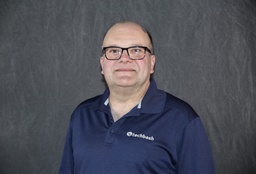


The last thing an engineer wants to see is their GitHub avatar next to the pull request that caused an outage.
Yet there it was. My smiling face. On that PR.
This was my first year at PostHog, and it felt like a real test of the culture. Would they blame me? Let it quietly color opinions of my work? Fire me over a mistake?

Nah.
My colleagues were supportive and understanding. The question wasn’t “who do we blame?” but “what allowed this to happen and how do we prevent it?” This is a company that looks at failure through the lens of systems and incentives, not individual fault. It embraces the ideas of blameless post-mortems.
If we go with “blame” as the predominant approach, then we’re implicitly accepting that deterrence is how organizations become safer. This is founded in the belief that individuals, not situations, cause errors.
That moment is just one of many reasons why I love working here. This is a company that backs up its principles with action.
A Year of PostHog
A year ago today, I started at PostHog, and it has been even better than I hoped. When I joined, I wrote:
Their company handbook really impressed me. What it communicates to me is that this is a remote-friendly company that values transparency, autonomy, and trust. It’s a company that treats its employees like adults and tries to minimize overhead.
It is easy to be cynical about company handbooks and the values they claim to uphold. Enron famously promoted Integrity, Respect, Communication, and Excellence (RICE) as its values, but we all know how that turned out.
What has stood out to me at PostHog is that the handbook reflects reality. The company thinks deeply about how it wants to operate and is willing to adjust when things drift. At our most recent all-company off-site in Tulum, we even revisited and changed some of our values to better reflect how we actually work.
That kind of self-awareness is rare. It’s one big reason why I love working here. Also, Tulum.
Retirement Job?
When Microsoft acquired GitHub, it gave me a lot of options. I took time off. I started a YC company. That company did not work out, so I took more time off. I was not in a hurry to get back to work, but I did miss the camaraderie of building things with other people. That is what led me to interview at PostHog.
In my interview, one of the founders asked an interesting question. Given that it seemed like I did not need to work, would I be motivated to work hard at PostHog? In other words, was this a “retirement job”?
Of course I said I would work hard. What else could I say?
But here’s what I didn’t say: writing code and building product doesn’t feel like hard work to me, at least not compared to what I did before. As a Director of Engineering, so much of my energy went into bureaucracy, politics, and navigating bad incentives.
That was exhausting.
Writing code is how I unwind.
So in a way, yes, this is a retirement job. Because I love doing it.
Polyglot
I also still have a lot to learn, and this has been a great place to do it.
My team builds the Feature Flags product, which spans the backend service, the frontend UI, and a large collection of SDKs. Over the past year, I have written production code in Python, TypeScript, Rust, Go, Ruby, Elixir, C#, and even PHP.
Yes, PHP. I held out for thirty years. The streak is over.
At one point, I shipped the same ETag caching feature to seven different SDKs in seven different languages in three days.
I am not an expert in all of these languages. But with a solid foundation in programming principles, and a lot of help from LLMs, I have been able to ramp up quickly.
Working across so many languages and paradigms has stretched my thinking and deepened my understanding of how software systems are built.
Team Lead
A while back I wrote Chutes and Ladder career path about how careers do not have to follow a neat, linear ladder. True to that idea, after a year as an individual contributor, I am stepping into a team lead role.
This was not something I actively sought out. I genuinely love being an IC. But, as has often happened in my career, this change grew out of a real need. We are carving out a new Flags Platform team from the Feature Flags team.
What excites me most about this split is the chance to focus deeply on the platform itself.
I am excited to see what year two brings. I will be spending a lot more time in Rust, pushing our flags platform to be faster and more resilient, and working my butt off to ensure my face stays out of future root cause analysis reports.