 Log in

Ryan welcomes back Tanya Janca, now part of the OWASP Top 10 team, to discuss what changed in the latest OWASP Top 10 release, how the list shifted from “outdated components” to a broader software supply chain focus, and why they added memory safety and vibe-coding as awareness items.
|
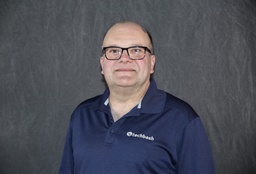
Sr. Content Developer at Microsoft, working remotely in PA, TechBash conference organizer, former Microsoft MVP, Husband, Dad and Geek.
|

Pennsylvania, USA

We are already halfway through 2026 📅 That means it’s the perfect time to look back at the big framework predictions made at the start of the year and see which trends are actually dominating our codebases. From checking our apps for a zoneless future to auditing AI-generated code, this week’s community round-up has you covered.
Dive into these expert insights and level up your stack:
Predictions for Angular in 2026: Were They Right? (Spanish)
Now that we are midway through the year, it’s time to check in on our expectations! This video features an insightful conversation mixed with a massive panel of experts — including Alejandro Cuba Ruiz @zorphdark, Eduardo Roth @eduardoRoth, Alfredo Pérez, Nicolás Molina @nicobytes, Vanessa Marely, and Ricardo Chavarría. Together, they look back at their original visions for 2026 to see which predictions have already become reality.
Watch the round-table discussion: https://youtu.be/xzaXVSrzuTs
From Commands to Conversations: AI-Assisted Tooling
Sonu Kapoor @SonuKapoor1978 explores how the Model Context Protocol (MCP) is fundamentally transforming Angular development this year. Discover how tooling has evolved to reason about your workspace, moving far beyond basic CLI scaffolding.
Read the full analysis: https://www.codemag.com/Article/2601071/From-Commands-to-Conversations-How-AI-Assisted-Tooling-Is-Transforming-Angular-Development
Your AI is Coding Angular Wrong & Quick Angular v21 Recap
Muhammad Ahsan Ayaz @codewith_ahsan drops two incredibly valuable videos. First, a rapid-fire refresher on everything that landed in Angular v21. Second, a crucial look at why standard AI models frequently still write outdated Angular code, and how you can fix it.
Watch the v21 Recap: https://youtu.be/pVTiAZgEslw
Watch “Your AI is Coding Wrong”: https://youtu.be/tCROVJMcAF8
Modern Angular Free Course
Looking for a comprehensive, up-to-date guide to the framework’s modern features as of 2026? Loiane Groner @loiane has released an entirely free course packed with modern best practices and architecture patterns.
Start learning here: https://www.youtube.com/playlist?list=PLGxZ4Rq3BOBqJfR254ZMuBfFRMeyr162U
Is Your Angular App Ready for Zoneless?
Zoneless is the definitive milestone for high-performance Angular apps, but is your codebase prepared yet? Alain Chautard @AlainChautard provides a practical checklist to ensure your app is fully ready for a zone-free architecture.
Watch the prep guide: https://www.youtube.com/watch?v=mcSR6IIKvEE
The Dev Life: Riding the New Angular Wave with Signals
Brooke Avery @JediBravery and Matthew Christiansen host Deborah Kurata @DeborahKurata on The Dev Life podcast to talk about the massive architectural paradigm shift brought on by Signals. Learn how to ride the reactive wave smoothly into the second half of the year.
Listen to the episode: https://www.youtube.com/watch?v=6mnF3RJ1G-Y
We are 6 months into 2026 — what has been your biggest Angular surprise so far? Did the panel hit the nail on the head, or did the framework take a direction you didn’t expect?
Keep the community ahead of the curve. Use #AngularSparkles to pass along these mid-year reflections and architectural insights 👇
Angular in 2026: Mid-Year Reality Check, Signals, and AI Code Quality! 🌊 was originally published in Angular Blog on Medium, where people are continuing the conversation by highlighting and responding to this story.
Pennsylvania, USA

This article introduces the official Anthropic C# SDK for integrating Claude AI into .NET applications. It covers installation, usage with ASP.NET Core, streaming responses, and tools like dependency injection and tool calling support. The SDK simplifies AI integration, offering strong typing, better maintainability, and seamless real-time interactions for .NET developers.

Pennsylvania, USA

Comment
WWDC 2026 isn’t about new features. It’s about whether Apple will finally ship AI that works, or disappoint again.
This is my first iOS Dev Weekly, so let me introduce myself.
I’m Sriyank Siddhartha, Head of Developer Community at next.app devCon. Twelve years ago, I ran my first mobile app and fell in love with building. I taught myself, then taught others - millions through my YouTube channel and my Pluralsight courses. It never stopped: Android, Flutter, Kotlin, React Native, and now iOS.
Writing this issue feels like a chance to explore mobile development from a fresh angle. With AI, framework lines might blur over time. Meanwhile, let’s enjoy building mobile apps.
Apple’s pressure this year is credibility, not features. At WWDC 2024, they announced Apple Intelligence with an AI-powered Siri. The demo was impressive. The release kept getting delayed. Now WWDC 2026 on June 8 is explicitly framed as showcasing “AI advancements”.
iOS 27 is reportedly a “Snow Leopard-style” release: focused on squashing bugs, improving battery life, and rewriting chunks of the OS instead of stacking flashy features. That’s not a bad thing. It’s exactly what a platform needs after years of accumulated complexity.
But the industry is watching the AI roadmap more carefully this time.
This week’s wishlist posts from respected developers make that clear. Majid is asking for Foundation Models image input, lazy custom layouts, and SwiftUI view recycling. Michael Tsai rounds up the community’s broader asks: quality improvements, AI skepticism, SwiftUI pain points, and better Xcode automation. Jan Van Rijn goes further - predicting agentic development, MCP for App Store Connect, and App Intents becoming essential. The pattern is clear: developers want Apple to fix what’s broken before shipping what’s new.
What developers do in the next 18 days, after the beta drops, determines how fast they can act on the answers.
– Sriyank Siddhartha
Sponsored Link
Call for Speakers at SwiftCon is open!SwiftCon is coming to Berlin as part of next.app devCon, the largest gathering of mobile app developers. We’re opening the CFP for iOS builders who go beyond tutorials: SwiftUI in production, architecture decisions, performance wins, and hard trade-offs. If it shipped, it belongs here. Submit your talk today.
News
WWDC 2026: Community PreviewMichael Tsai gathers the main questions around WWDC 2026: will Apple’s AI actually work, what’s the real status of labs after the pandemic, is the new design language sustainable, and what are the Design Awards telling us about Apple’s priorities. A strong set-the-scene item for WWDC week.
Tools
SwiftTUIAn unusual and technically interesting tool for Swift developers. SwiftTUI brings SwiftUI to the terminal. It provides an API similar to SwiftUI for building text-based user interfaces: stacks, .frame(), .padding(), ScrollView, TextField, buttons with arrow key navigation, ANSI colors, bold/italic/underline text, and @State, @Binding, @Environment property wrappers. The goal is to resemble SwiftUI in API and inner workings while making sense for terminal apps.
Code
SwiftUI animation timingNeal Hoeger explores SwiftUI animation timing, covering animation curves, easing, spring animations, timing parameters, and the CustomAnimation protocol. A practical guide for developers who want precise control over their SwiftUI animations.
Core Data + Observation: From Property-Level Reactivity to a Freer Mental Model
Fatbobman explains how Observation can bring property-level reactivity ideas to Core Data, why that matters for SwiftUI mental models, and where the trade-offs are. Deep technical content about Core Data architecture and modern SwiftUI integration.
Stateless Actors
Matt Massicotte explores stateless actors in Swift concurrency. Advanced Swift concurrency topic about actors without internal state, useful for developers building concurrent code with clear isolation boundaries.
And finally...
This author literally killed SwiftUI by migrating an entire iOS app to UIKit in one week. Controversial, but worth reading for the balance.
Pennsylvania, USA
Learn how to profile and optimize agentic AI apps on Intel-powered Windows PCs. In this live demo, analyze performance across CPU, GPU, and NPU to identify bottlenecks and improve responsiveness and power efficiency. See how to build performance profiles and apply tuning techniques using Intel Tracing Technology, OpenVINO, and Windows ML.
Seating for this session is first-come, first-served. Add it to your schedule to plan your day and arrive early to secure a spot.
𝗦𝗽𝗲𝗮𝗸𝗲𝗿𝘀:
* Freddy Chiu
* Vasanth Tovinkere
𝗦𝗲𝘀𝘀𝗶𝗼𝗻 𝗜𝗻𝗳𝗼𝗿𝗺𝗮𝘁𝗶𝗼𝗻:
This is one of many sessions from the Microsoft Build 2026 event. View even more sessions on-demand and learn about Microsoft Build at https://build.microsoft.com
DEMSP384 | Cloud platform & data
Demo | (300) Advanced
#MSBuild
Chapters:
0:00 - Introduction and speaker introductions
00:03:39 - Types of telemetry: platform/system vs application/middleware
00:05:31 - Integration of Intel tracing technologies (ITT) for software telemetry
00:09:22 - System-Level Hardware and Software Interaction Overview
00:11:10 - Tool Invocation, Profiling, and Optimization Discussion
00:13:59 - Introduction to platform telemetry and hardware-level metrics
00:16:05 - Custom software instrumentation and task creation within telemetry data
00:16:40 - Transition to demo section and introduction of 3.6B parameter model
00:19:33 - Analyzing Model Compilation Time and Software Stack Operations

Pennsylvania, USA

This week, we discuss NVIDIA going consumer, Microsoft Build, and the Anthropic/OpenAI IPO race. Plus, does credit card insurance work?
Watch the YouTube Live Recording of Episode 575
Runner-up Titles
- Who Wins AI?
- Models vs. Middleware
- Jensen After Dark
- Once again, robots
- Why is this something you talk about in a keynote?
- Could this have been an app?
- Defeating Apple, the sword in the stone
- Your tokens are my margin
- Prisons, schools and military - what is the Venn diagram?
- Every enterprise is unhappy in their own way
Rundown
- Nvidia
- NVIDIA and Microsoft Reinvent Windows PCs for the Age of Personal AI
- Nvidia's N1X Apple Silicon rival is two years behind
- Nvidia, Microsoft, and Arm are all teasing Nvidia's new N1X laptop processors
- Blackstone and Google launch $5B TPU cloud venture with 500MW of AI capacity
- AI server demand drives staggering revenue growth for Dell and its stock soars
- Microsoft Build
- OpenAI and Anthropic Go Public
- Anthropic Files to Go Public, Setting Stage for Huge I.P.O.
- OpenAI Prepares to File to Go Public in Coming Weeks
- How Anthropic Got So Big, So Fast
- Anthropic and SpaceX compute
- OpenAI launches new Codex tools for white-collar work
- OpenAI Hires ServiceNow CMO Colin Fleming to Lead Business Marketing Push
- Wiz + Anthropic: Claude Enterprise Meets the Security Graph
Relevant to your Interests
- Grafana breach caused by missed token rotation after TanStack attack
- GitHub Got Hacked. The AI Security Arms Race is Here
- Hackers Simply Asked Meta AI to Give Them Access to High-Profile Instagram Accounts. It Worked
- SpaceX not the behemoth everyone thought
- Spotify adds AI-powered Q&A and briefing generation features to podcasts
- Amazon Web Services - Four Years and Out + AWS Fired the One Employee Who Gave a Damn
- Introducing UniFi 5G Backup
- AI Generated Summaries
- WSJ: How I Choose Which Cloudflare Employees to Replace with AI
- Microsoft open-sources the earliest DOS source code discovered to date
- Audio-generation app Huxe, founded by former NotebookLM developers, shuts down
- Bill Gates Spent Years Crafting His Image. Now It's Cracking.
- How do AI Layoffs Work? Some Speculation.
- Snowflake to Acquire Natoma to Bring Governed Agentic Access to the Enterprise
- U.S. companies have an AI problem. Indian IT wants to be the solution
- Meta to start testing AI subscription services, cheapest plan at $7.99/month
Sponsors
- Sentry - Quit Buggin': use code sdt26 for $100 in credit for new customers
Nonsense
Listener Feedback
- Henning corrects Coté’s pronunciation of León.
Conferences
- VMware User Group, Dallas, June 9-11, 2026
- WeAreDevelopers Europe, July 8-10, 2026 Berlin, Coté speaking.
- DevOpsDays Graz, Sept 4-5, 2026
- DevOpsDays Rockies, Sept. 22 – 23, 2026, Discount Code: 26DODSWEDEFTALK
- WeAreDevelopers NA, Sept 23-25, 2026, Discount Code: DEVPOD26
- DevOpsDays Dallas, Sept 28-29, 2026
- DevOpsDays Vilnius, Sep 30 - Oct 1, 2006
- DevOpsDays Istanbul, Oct 24th, 2026, Coté keynoting.
- VMware User Group, Orlando, Oct 20-22, 2026
SDT News & Community
- Join our Slack community
- Email the show: questions@softwaredefinedtalk.com
- Free stickers: Email your address to stickers@softwaredefinedtalk.com
- Follow us on social media: Twitter, Threads, Mastodon, LinkedIn, BlueSky
- Watch us on: Twitch, YouTube, Instagram, TikTok
- Book offer: Use code SDT for $20 off "Digital WTF" by Coté
- Sponsor the show
- Sponsor more podcasts with Failover Media
Recommendations
- Brandon: The spelled-out intro to neural networks and backpropagation: building micrograd
- Matt:
- Coté: ElevenLabs, for example Coté’s learning Dutch podcast.
Sponsored By:
Download audio: https://aphid.fireside.fm/d/1437767933/9b74150b-3553-49dc-8332-f89bbbba9f92/99e0a238-6e79-4dbf-9d23-5449497a146b.mp3
Pennsylvania, USA
Next Page of Stories