
Sr. Content Developer at Microsoft, working remotely in PA, TechBash conference organizer, former Microsoft MVP, Husband, Dad and Geek.
154679 stories
·
33 followers

Open Source Ecosystems

1 Share

The following article originally appeared on the Asimov’s Addendum Substack and is being reposted here with the author’s permission.

Bill Gurley has an excellent article on what he calls open source strategy, which we recommend reading. There is a lot to debate about his concluding argument in particular: that open-weight models are central to keeping the AI market rent-free. The limits of open-weight AI as the primary open source strategy are surely considerable though, if it still requires expensive hardware to run on, and if the architecture ultimately remains monolithic—rather than composable and protocol-centric.

A related consideration comes from Anthropic’s recent acquisition of Stainless—a startup that generates SDKs, command-line tools, and MCP servers from API specifications. This illustrates that open protocols like MCP, even when publicly governed,1 remain exposed at their complementary layers to private actors capturing rents. (Protocol openness does not eliminate this and instead probably enables it, by enabling market growth).

We asked Claude to analyze this acquisition, going beyond the press releases. Its first pass overstated parts of the competitive-denial story; what follows is what survived it taking a closer look:

  1. Complement capture, not protocol capture. MCP—the standard that lets AI agents talk to other software—remains open, and its governance has been handed to an independent foundation. What Anthropic bought is the company that turned that standard into something most developers could actually use. Stainless was the dominant tool for taking an ordinary business API (say, a hotel booking system or a customer database) and converting it into something an AI agent could call through MCP. The open standard is still open. The path most developers walked to use it has now been bought.
  2. This isn’t a one-off—the whole layer is consolidating. Stainless wasn’t alone in this market. Its main competitor, Fern, was bought by Postman in January 2026. Anthropic bought Stainless four months later, in May 2026. That leaves Speakeasy as the only major independent player, plus an open-source fallback called OpenAPI Generator that most developers consider too rough for production use without significant manual work. In under five months, two of the three serious companies in this part of the market have been absorbed into larger platforms. The Stainless deal is more visible because of who bought it and why, but the broader pattern matters more: an entire layer of AI infrastructure is being pulled inside platform owners.
  3. Moat migration. The gap in raw model capability between Anthropic, OpenAI, and Google has narrowed considerably and continues to close, and the implication is that model quality alone is unlikely to be the principal basis of competitive advantage over the next two years. What may distinguish the leading firms instead is the quality of the developer experience around their models: how easily a business or an engineer can build something useful on top of a given model, how cleanly the tooling integrates with existing systems, and how reliable the connectors are over time.
  4. Stainless was founded by Alex Rattray, formerly of Stripe. Stripe built its market position largely on unusually well-designed developer tools, and Stainless was, in effect, an attempt to apply the same approach to the layer between AI APIs and the rest of the software economy. Anthropic has acquired the team that knows how to do this.

  5. Pricing logic, with caveats on denial. Stainless was last valued at $150M in December 2025; at >$300M five months later, this is a roughly 2x strategic markup, not acqui-hire arithmetic. Removing a critical-path external dependency on Anthropic’s own SDKs, while denying it to a tight set of competitors, is rational at that price—but the denial logic is partial. Speakeasy is a viable substitute, and OpenAI was reportedly already migrating off Stainless. The friction tax falls hardest on smaller players who lack the engineering bench to absorb migration cost.

…The press release calls it “extending reach”; the InfoWorld read—“last-mile developer experience”—is closer, but the complement-capture component, even if partial, is real.

-*-

Now, while Claude might be overstating some of the market risks associated with this acquisition (you tell us?), it shows that open source’s impacts are highly conditional on its dependencies and should never be analyzed in isolation from the market’s software stack and architecture. This is equally true for open weight models—being dependent on data, compute, and distribution—as it is for open protocols like MCP, dependent on constant API translations and access. Tracking those interdependencies is what a full ecosystem view involves and is helpful to undertake in order to consider where chokepoints might arise, and in turn, where open source strategy might eventually fail or be captured.


Footnotes

  1. In this case by the Agentic AI Foundation under the Linux Foundation ↩


Read the whole story
alvinashcraft
11 minutes ago
reply
Pennsylvania, USA
Share this story
Delete

Improving Python Through PEPs and Protocols

1 Share

Have you ever been confused by the naming of modules you’re importing from a package? Is there a standard way to organize and name your Python virtual environments? This week on the show, Brett Cannon returns to discuss the Python Enhancement Proposals (PEPs) he’s been working on recently.

We start with PEP 794, which extends the metadata fields for Python packages to specify the import names a project provides. The metadata will help developers identify the correct project to install when they know the import name or the importable module names a project provides once installed.

We dive back into WebAssembly to discuss PEP 816, which specifies the WASI support in CPython releases. We also wade into the controversy around PEP 832, which proposes standards around naming and the discovery of virtual environments.

Brett shares his motivation for being a prolific author and supporter of PEPs. We discuss his promotion of standards and protocols to simplify the Python ecosystem for current and future developers.

Course Spotlight: Tapping Into the Zen of Python

Explore the Zen of Python and its 19 guiding principles for writing readable, practical code. Learn its history, jokes, and meaning.

Topics:

  • 00:00:00 – Introduction
  • 00:02:01 – Prolific PEP creation
  • 00:03:37 – Improving the future of Python through standards
  • 00:09:30 – PEP 794 - Import Name Metadata
  • 00:30:12 – PEP 816 - WASI (WebAssembly System Interface) Support
  • 00:40:55 – Why the interest in WASI?
  • 00:45:23 – Video Course Spotlight
  • 00:47:07 – PEP 832 - Virtual Environment Discovery
  • 01:10:02 – Type Server Protocol
  • 01:17:41 – How can people follow your work online?
  • 01:19:12 – Thanks and goodbye

Show Links:

Level up your Python skills with our expert-led courses:

Support the podcast & join our community of Pythonistas


Download audio: https://dts.podtrac.com/redirect.mp3/files.realpython.com/podcasts/RPP_E297_02_Brett.a375616febc2.mp3
Read the whole story
alvinashcraft
12 minutes ago
reply
Pennsylvania, USA
Share this story
Delete

The "Painting by Numbers" Scrum Master vs. The Quiet Leader Who Made the Team Self-Sufficient | Njegos Ilic

1 Share

Njegos Ilic: The "Painting by Numbers" Scrum Master vs. The Quiet Leader Who Made the Team Self-Sufficient

In this episode, we refer to the concepts of Scrum Master as facilitator and team empowerment.

The Bad Scrum Master: The "Painting by Numbers" Approach That Leaves Product Owners Working Alone

Read the full Show Notes and search through the world's largest audio library on Agile and Scrum directly on the Scrum Master Toolbox Podcast website: http://bit.ly/SMTP_ShowNotes.


"You basically feel totally alone because you are trying to deliver value as a team, but if nobody asks anything and nobody challenges anything, you end up defining everything yourself." - Njegos Ilic


Njegos describes the worst Scrum Master anti-pattern he's witnessed: the "painting by numbers" Scrum Master who runs every ceremony by the book — dailies, refinements, plannings, retros, reviews — but without understanding the purpose behind any of them. The meetings become a reporting cycle: "What did you do yesterday?" with no interaction, no challenging, no real engagement. From the product owner's perspective, this is devastating. Njegos describes feeling completely alone — trying to deliver value as a team while nobody engages, nobody asks questions, nobody pushes back on assumptions. The downstream effect is predictable: gaps that could have been caught early with a single conversation only surface during development or after deployment. Worse, the lack of engagement creates doubt and overthinking — the product owner starts over-defining requirements because there's no feedback loop, which reinforces the very passivity that caused the problem.


Self-reflection Question: Are the ceremonies on your team creating genuine engagement and learning — or have they become a reporting cycle that nobody actually needs?

The Great Scrum Master: The Quiet, Impactful Leader Who Made the Team Self-Sufficient

Read the full Show Notes and search through the world's largest audio library on Agile and Scrum directly on the Scrum Master Toolbox Podcast website: http://bit.ly/SMTP_ShowNotes.


"The best Scrum Masters I worked with were invisible — they knew always when to speak, they sensed the pulse of the team, and they weren't afraid to jump in when needed." - Njegos Ilic


The best Scrum Masters Njegos has worked with share a common trait: they were almost invisible. They didn't dominate meetings or insert themselves where they weren't needed. But they were always present — sensing the team's pulse, knowing when to step in, unafraid to say "we're out of time, let's take this offline." They were knowledgeable about the product, which earned them genuine respect from developers. And perhaps most powerfully, they delegated facilitation itself. Njegos shares an example where a Scrum Master introduced a round-robin system: when new developers joined the team, everyone took turns facilitating meetings — planning, retros, dailies. This wasn't just delegation for efficiency; it was empowerment by design. Team members who facilitated a retrospective suddenly understood how hard it is to lead one. That empathy changed how they participated when someone else was facilitating. The Scrum Master remained the guide, but the team grew its own capacity to self-organize.


Self-reflection Question: If your Scrum Master disappeared tomorrow, would your team know how to facilitate its own ceremonies — and if not, what does that say about how the role is being used?


[The Scrum Master Toolbox Podcast Recommends]

🔥In the ruthless world of fintech, success isn't just about innovation—it's about coaching!🔥

Angela thought she was just there to coach a team. But now, she's caught in the middle of a corporate espionage drama that could make or break the future of digital banking. Can she help the team regain their mojo and outwit their rivals, or will the competition crush their ambitions? As alliances shift and the pressure builds, one thing becomes clear: this isn't just about the product—it's about the people.


🚨 Will Angela's coaching be enough? Find out in Shift: From Product to People—the gripping story of high-stakes innovation and corporate intrigue.


Buy Now on Amazon


[The Scrum Master Toolbox Podcast Recommends]


About Njegos Ilic


Njegos is a motivated and forward-thinking Product Manager and Agile Project Manager with experience in fast-paced SaaS environments. He empowers teams through leadership and guidance across product development. With a Lean mindset, he simplifies complexity, delivers in small, testable increments, and leverages rapid feedback loops to prioritize outcomes over output.


You can link with Njegos Ilic on LinkedIn.


Download audio: https://traffic.libsyn.com/secure/scrummastertoolbox/20260529_Njegos_Ilic_F.mp3?dest-id=246429
Read the whole story
alvinashcraft
12 minutes ago
reply
Pennsylvania, USA
Share this story
Delete

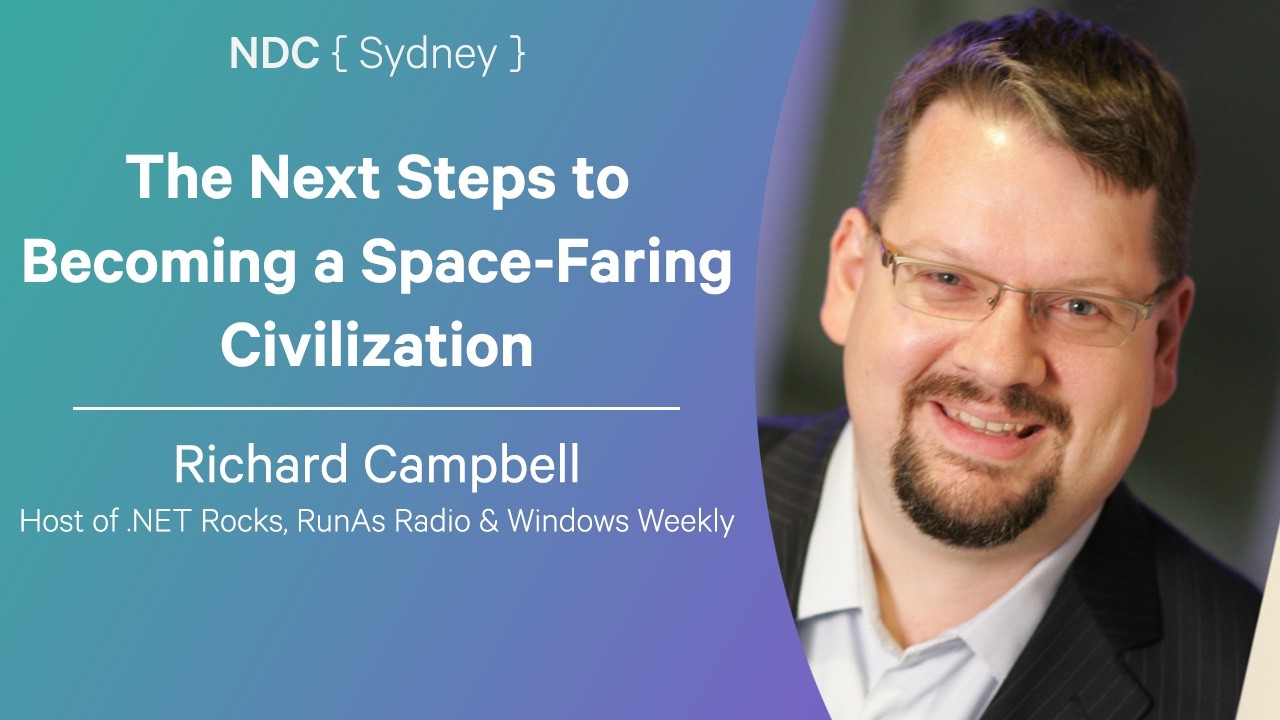
The Next Steps to Becoming a Space-Faring Civilization - Richard Campbell - NDC Sydney 2026

1 Share
From: NDC
Duration: 51:43
Views: 99

This talk was recorded at NDC Sydney in Sydney, Australia. #ndcsydney #ndcconferences #developer #softwaredeveloper

Attend the next NDC conference near you:
https://ndcconferences.com
https://ndcsydney.com/

Subscribe to our YouTube channel and learn every day:
/ @NDC

Follow our Social Media!

https://www.facebook.com/ndcconferences
https://twitter.com/NDC_Conferences
https://www.instagram.com/ndc_conferences/

#space

What will it take for humanity to become a space-faring civilization?

Join Richard Campbell as he talks about the near-term technologies that are moving this idea closer to reality. The first problem is getting up there - and improvements in rocket design have substantially lowered the cost of access to space. Then the question - what do we do up there? And how do we stay? And is that even possible in the long term? Why bother being a space-faring civilization?

Read the whole story
alvinashcraft
12 minutes ago
reply
Pennsylvania, USA
Share this story
Delete

Episode 517 - Navigating AI and Your Career - All Things AI 2026

1 Share

if you want to check out all the things ⁠⁠⁠⁠⁠⁠⁠⁠⁠⁠⁠⁠⁠⁠⁠⁠⁠⁠⁠⁠⁠⁠⁠⁠⁠torc.dev⁠⁠⁠⁠⁠⁠⁠⁠⁠⁠⁠⁠⁠⁠⁠⁠⁠⁠⁠⁠⁠⁠⁠⁠⁠ has going on head to ⁠⁠⁠⁠⁠⁠⁠⁠⁠⁠⁠⁠⁠⁠⁠⁠⁠⁠⁠⁠⁠⁠⁠⁠⁠linktr.ee/taylordesseyn⁠⁠⁠⁠⁠⁠⁠⁠⁠⁠⁠⁠⁠⁠⁠⁠⁠⁠⁠⁠⁠⁠⁠⁠⁠ for more information on how to get plugged in!


Download audio: https://anchor.fm/s/ce6260/podcast/play/120693872/https%3A%2F%2Fd3ctxlq1ktw2nl.cloudfront.net%2Fstaging%2F2026-4-28%2Ff6fd4233-9dcc-de60-b941-bb8303e2c438.mp3
Read the whole story
alvinashcraft
12 minutes ago
reply
Pennsylvania, USA
Share this story
Delete

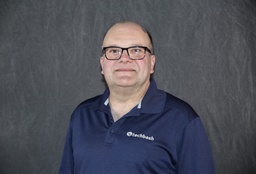
AGL 471: Mike Krupit

1 Share

About Mike

Mike founded Trajectify in 2013 to focus on coaching entrepreneurs of young companies and small businesses. He is the veteran of eight diverse startups, both East and West Coast, and has been a fixture in the booms and busts of the last 30 years.

He was a young software geek that grew from CTO to COO to CEO as he developed his strong sense of leadership. Mike honed his management skills with the young companies as they became successful exits and mature businesses, including three IPOs and a bunch of mergers and acquisitions.

His passion to partner with and learn from great visionaries helped start and operate some diverse (and pretty cool) businesses. He co-founded healthy food company (Real Food Works). He co-founded a business incubator (Novotorium). He developed the e-commerce technology and operations at online music pioneer, CDNOW, was part of taking the company public, later becoming CDNOW’s CEO and improved the bottom line by $40M with revenues of $150M.

Mike helped turn around a 15 year old telecommunications company, doubling revenues to $25M. He spent a decade in Silicon Valley where he helped build Verity (a pioneer in search engines, IPO and sold to Autonomy/HP) and KnowledgeSet (one of the first companies to put data on a CD). In the Northeast, Mike worked with Infonautics (a pioneer in online information services, that also produced a bunch of great entrepreneurs and patents), and Knite, a spin-out from Princeton University to commercialize an innovation to the spark plug.


Today We Talked About

  • Mike’s background
  • Software Geek
  • CTO to COO
  • COO to CEO
  • Leadership Skill are transferable
  • People Skills
  • wrong people, wrong seats
  • Learning leadership skills
  • advisory vs. coaching
  • quarterly planning

Connect with Mike


Leave me a tip $
Click here to Donate to the show


I hope you enjoyed this show, please head over to Apple Podcasts and subscribe and leave me a rating and review, even one sentence will help spread the word.  Thanks again!


Download audio: https://media.blubrry.com/a_geek_leader_podcast__/mc.blubrry.com/a_geek_leader_podcast__/AGL_471_Mike_Krupit.mp3?awCollectionId=300549&awEpisodeId=12069881&aw_0_azn.pgenre=Business&aw_0_1st.ri=blubrry&aw_0_azn.pcountry=US&aw_0_azn.planguage=en&cat_exclude=IAB1-8%2CIAB1-9%2CIAB7-41%2CIAB8-5%2CIAB8-18%2CIAB11-4%2CIAB25%2CIAB26&aw_0_cnt.rss=https%3A%2F%2Fwww.ageekleader.com%2Ffeed%2Fpodcast
Read the whole story
alvinashcraft
12 minutes ago
reply
Pennsylvania, USA
Share this story
Delete
Next Page of Stories