 Log in

Visual Studio 2026 version 18.9 adds Copilot thinking effort controls, a Git review agent and org-level custom agents, followed by an August 18 bug-fix update.

|
Sr. Content Developer at Microsoft, working remotely in PA, TechBash conference organizer, former Microsoft MVP, Husband, Dad and Geek.
|

Across the PyCharm 2026.2 release line, we shipped 263 fixes and improvements. Many improve Python code insight directly, with more precise type inference, fewer false positives, smarter completion and imports, and more reliable refactoring. Here are some of the smaller changes you’re likely to notice in everyday Python development.
SQLAlchemy 2.0 support
SQLAlchemy has been a long-standing source of false positives – enough that several duplicate tickets have accumulated over the years. This release resolves a batch of them for the 2.0 style.
String forward-references inside Mapped[...] resolve correctly:
posts: Mapped[list["Post"]] = relationship(back_populates="author")

# "Post" now resolves to the model class
PyCharm also correctly infers the mapped type returned by Session.get(), instead of treating the result as the model class itself:
report = session.get(Report, report_id)

reveal_type(report)  # was: type[Report] | None   now: Report | None
Modern hybrid_property setters written as @name.inplace.setter are recognized, so assigning to the property no longer produces a warning. Model class attributes defined via mixins are picked up again, too, clearing the old unexpected argument reports on model constructors.
(PY-78816, PY-65142, PY-59732, PY-51906, PY-28762)
Code insight and type inference
Control-flow narrowing and “unreachable code”
Several false This code is unreachable reports and instances of lost narrowing across loops have been fixed. The common issue: flow analysis either gave up or over-eagerly narrowed to Never in branches it should have kept alive.
isinstance on a numeric union no longer kills the else branch:
def foo(y: int | float) -> None:

    if isinstance(y, float):

        pass

    else:

        print(y)  # was flagged unreachable, y inferred as Never
Narrowing also survives a while loop, so re-narrowing an optional attribute inside the loop body no longer reports a bogus has no attribute error.
(PY-83206, PY-83354, PY-88265)
Strings inside type annotations
A string used as metadata inside Annotated[...] – a Pydantic discriminator field name, for instance – is no longer parsed as a forward reference and flagged as unresolved.
Iterable unpacking and star expressions
PyCharm’s analysis of tuple and star unpacking could lose type information and fall back to Any. Unpacking a starred value into a tuple lost its element types, *-expansion collapsed to Any, and several genuine errors went unreported. Starred expressions preserve their element types:
def a() -> tuple[int, int]:

    return 2, 3

def b() -> tuple[int, int, int]:

    return (1, *a())  # no more bogus "Expected tuple[int, int, int]"
(PY-12592, PY-27205, PY-43585, PY-90219)
Augmented assignment
A cluster of false positives came from augmented assignments being misanalyzed. A simple /= on an int produced the wrong type:
foo = 5

foo /= 2

reveal_type(foo)  # was: int   now: float | int
(PY-80622)
Self and constructor return types
Self binds correctly through classmethod parameters typed as type[Self]:
class A:

    @classmethod

    def bar(cls, y: type[Self]) -> Self: ...

x = A.bar(A)      # was a spurious "Expected type[A], got type[A]"

reveal_type(x)    # was: Any   now: A
Construction also respects __new__, __init__, and metaclass __call__. When __new__ returns something other than an instance, that’s the constructed type – even when an __init__ is present. The same fix covers explicitly parameterized calls like MyClass[int]() and __new__ assigned as a class attribute.
(PY-89296, PY-77611, PY-88644, PY-89571)
Enum members: Literal types for .value and .name
Reading an enum member’s .value or .name yields a precise Literal instead of a widened str or int, so assignments to Literal[...] target type-check. This matches mypy’s inference:
from enum import Enum

from typing import Literal

class E(Enum):

    a = "a"

b: Literal["a"] = E.a.value   # was: Expected 'Literal["a"]', got 'str'

n: Literal["a"] = E.a.name    # .name is a Literal too
Parameter types inferred from decorators
When a decorator constrains the callable it accepts, the decorated function’s parameters are inferred from that constraint instead of falling back to Any:
from typing import Callable

def d(fn: Callable[[int], str]): ...

@d

def f(a):

    reveal_type(a)   # was: Any   now: int
(PY-79204)
Also fixed
- Keyword arguments in a class header are validated against the base class’s
__init_subclass__signature, and offered in completion (PY-79173). - An ellipsis in a
Callableused as a PEP 695 type-parameter bound no longer reports a bogus Invalid type expression (PY-83570). - Type-checker findings are split into granular suppression codes rather than a single
PyTypeCheckerid, and# noinspectiondirectives accept a simplified name form.PyTypeCheckerstill works as a blanket ignore (PY-90265).
Completion and auto-import
Smarter auto-import
Auto-import is now noticeably less noisy. Previously, if a module was already imported, PyCharm would offer to add a second, redundant import instead of qualifying through the one you already had. The quick-fix – and the completion popup – prefer to reuse the existing import.
Given pkg/src.py containing MyClass, and a file that already imports the module, Alt+Enter produces this:
from pkg import src  # no longer flagged as unused

src.MyClass
instead of adding from pkg.src import MyClass. The same reuse logic applies to plain import pkg.src, and to the auto-import completion on a second Ctrl+Space.
Nested classes can be auto-imported too, which is something PyCharm didn’t previously support:
# mod.py

class Outer:

    class Inner:

        pass

# main.py – Alt+Enter on Inner now offers "Import Outer from mod"

from mod import Outer

value = Outer.Inner()
(PY-87970, PY-87971, PY-87972, PY-88009, PY-88016)
Completion for unittest.mock.patch() targets
Patching by string target previously offered no code assistance, so dotted paths had to be entered manually. The string argument to mock.patch(...) gets code completion for modules, classes, and their attributes, and it no longer suggests the invalid as keyword mid-path:
from unittest import mock

# sample.py defines: class Foo: my_attr = 42

with mock.patch("sample.Foo.my_attr", 14):

    ...

# completion now offers `sample`, `Foo`, and `my_attr`
(PY-89189, PY-89191, PY-89192)
Typed signatures when overriding built-in methods
Completing an override of a dunder or built-in method fills in the full annotated signature – and auto-imports the types it needs – instead of bare parameters:
from types import TracebackType

class A:

    def __exit__(self, exc_type: type[BaseException] | None,

                 exc_val: BaseException | None,

                 exc_tb: TracebackType | None): ...

# was: def __exit__(self, exc_type, exc_val, exc_tb):
(PY-79218)
Editor and inspections
Type inlay hints
Inferred type arguments are shown inline at the call site, so you can see what a generic resolved to without hovering over it:
class A[T]:

    def __init__(self, t: T): ...

A[int](1)     # [int] shown as an inlay hint
Type names rendered inside inlay hints – return types and solved arguments alike – are also clickable, so you can jump straight to a type’s definition from the hint.
f-string format-spec validation
PyCharm already validated the str.format() mini-language. Those checks apply to f-strings too, and PyCharm flags formatting a type that doesn’t implement __format__:
data = 1

f"{data:.2f}"   # ok

f"{data:.2q}"   # now flagged: unsupported format spec

class A: ...

f"{A():d}"      # now flagged: A doesn't support the 'd' format
Refactoring
The Rename refactoring also updates references to a module when the module itself is renamed. Previously, the renaming left importing sites pointing at the old name:
# rename provider/provider_module.py → some_module.py

from ..provider import provider_module  # this reference is updated too
(PY-53274)
The Refactor | Field action is now Attribute, and the documentation says “instance attributes” to match Python terminology (PY-85828).
Conclusion
Taken together, these changes make PyCharm’s understanding of Python more precise and predictable: fewer false positives, better type inference, smarter completion, and less time spent working around cases where the IDE gets valid code wrong.
Many of these improvements started with real-world examples reported by users. If PyCharm still misunderstands a typing pattern, framework API, or other valid Python code in your project, let us know in YouTrack – a small reproducer can help us turn that friction into the next fix.
Try PyCharm 2026.2 and let us know which improvements make the biggest difference for your workflow.
Thank you for using PyCharm!

Pennsylvania, USA


The latest round of restrictions and safeguards for frontier models are overly fussy and limiting. A Claude skill that I created demonstrates what happens when guardrails go astray. My skill helps me to find articles and blog posts that go into O’Reilly Radar’s monthly Trends to Watch. It reads roughly a dozen well-known sites like The New Stack, The Next Web, and Hacker News, plus any other sources that it finds useful. After reading the sites, it produces a digest of the most important articles published in the last day. I use it as a sanity check on my own reading: Did I miss anything important? Am I on the fence about something that might be an important leading indicator?
I’ve used the skill daily for a couple of months now. It suddenly stopped working with the following message:
API Error: Sonnet 5’s safeguards flagged this message. Our intentionally broad safeguards allow us to deliver more capabilities faster, but can sometimes flag legitimate cybersecurity work. Apply to the Cyber Verification Program to reduce these interruptions. Send feedback with /feedback or learn more: https://support.claude.com/en/articles/14604842-real-time-cyber-safeguards-on-claude
When I started a new Claude Code session with Haiku, the skill worked without problems. (I didn’t try Opus or Fable; if Sonnet found the skill dangerous, I’m sure Opus and Fable would draw the same conclusion.) GPT 5.6 with “high” reasoning was able to execute a very similar skill without problems. So what happened to Sonnet?
The best approach to debugging AI is often to ask the AI itself, so I pasted the message into another Claude Code session and asked it what was happening. The response came down to the descriptions of Hacker News, Bleeping Computer, and The Register. The phrase “vulnerabilities, exploits, threat reporting” in the description of Hacker News triggered Sonnet’s guardrails. Ironically, that description is both incorrect and Claude generated. (Reminder to self: Be more careful when asking Claude to develop a skill from a task.) Sonnet came up with three solutions, the first of which was to let it rewrite the skill with more neutral descriptions like “security industry news.” Fair enough, but I did the editing myself.
Then I went back to the original Claude Code session. It still didn’t work. I expected that I’d need to do something to reload the skill, but the problem was worse. Regardless of the prompt, the original session wouldn’t do anything except repeat the error message. It wouldn’t even commit the modified skill to my GitHub repo. However, Sonnet executed my skill correctly in a new Claude Code instance.
So I returned to Sonnet to find out what’s going on. The answer was interesting: The error may have been triggered by the skill, but when evaluating security threats, the models base their decisions on the entire conversation, not just the specific skill that was called. If a model needs to call a skill that it thinks is problematic, that call is part of the conversation, part of the context. The entire conversation is then forever dead and lost.
What can we learn from this? First, it’s a problem for a program to stop working because of a change over which you have no control. If anything, the industry has erred on the other side; we’re all familiar with “we don’t really understand why this works, so don’t touch it, don’t update the compiler, don’t update the libraries, and run it on emulators of computers that haven’t been built in 40 years.” That’s not just a problem for COBOL code from the 1970s; we see the same thing with C, C++, Java, JavaScript, and just about every language that ever went into production. Legacy code is everywhere. The “don’t change anything” approach isn’t necessarily a bad thing; it certainly beats “here’s a new library, you’re going to love it, you can’t use the old version any more, and wow, look at all the things it broke, guess you’ll have to fix them.” AI where working code breaks at random is a lot less useful than AI that works day in and day out. Stability is a virtue. It’s impossible to work effectively when the environment changes from day to day and isn’t under your control.
But that’s not really what bothers me. It’s rather bizarre that reading well-known sources is treated as a security risk, especially when the “risk” seems to come from an AI-generated description. Of course, we know about hallucinations, errors, and prompt injections. The possibility of a Hacker News post that injects a hostile prompt isn’t zero, and it’s also possible that a model might mistakenly interpret an example of a hostile action as a prompt. I also don’t expect any model to reason that a skill must be safe because it’s been in use for months (though files have time stamps). Artificial intelligence always coexists with artificial stupidity, as does natural intelligence.
Guardrails may keep you from going off a cliff, but they may also prevent you from going where you need to go. And that’s a problem. There’s a basic concept from signal processing and data science called the receiver operating characteristic (ROC). In any binary classification system, you can never achieve perfect classification. The only way to guarantee that no true positives (dangerous things) slip through the classifier is to reject everything. The opposite is equally true: The only way to eliminate false positives (things that look dangerous but aren’t) is to let everything through, including dangerous actions. In theory, it’s possible to get arbitrarily close to perfect classification, but you know how that goes: “The difference between theory and practice is bigger in practice than in theory.”
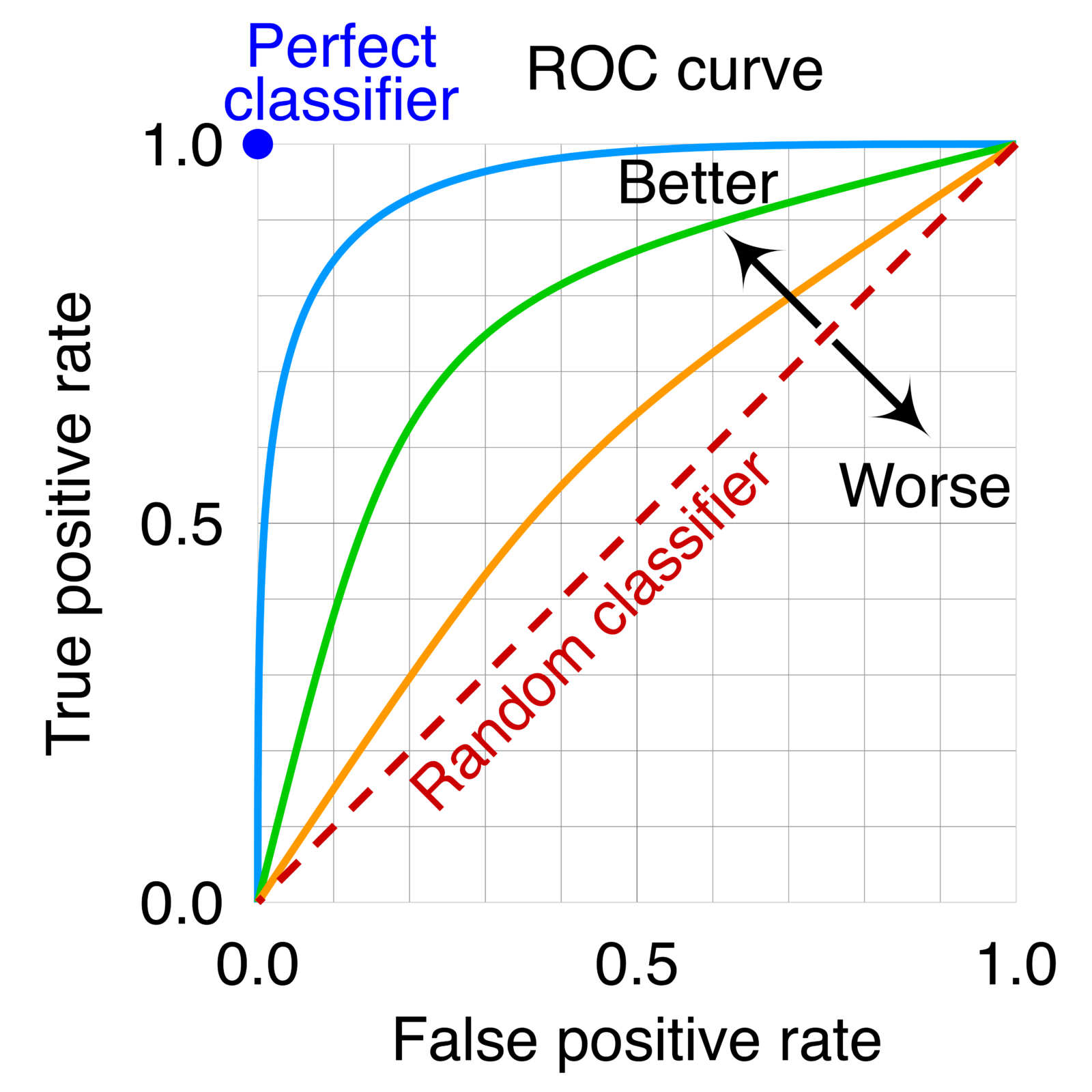
We know how to make AI “safe”: Go back to 2022 and models that can only tell the difference between cats and dogs. The model might mislabel a few things, but the consequences of an error are small. Safety comes with limitations, and none of us who use AI for real work want to return to the days of dogs, cats, and bananas. And while I don’t want the ability to use Claude to generate hostile attacks against unsuspecting victims, and while I understand the danger of interpreting any input text as a command (for example, an article describing the Morris worm), I have a problem with an AI that refuses to perform reasonable tasks. The ROC tells us that we can’t have perfect guardrails, but there’s no rule against overly fussy ones. What’s allowed, and what’s forbidden? What are the limits? We don’t know. And that’s the situation we’re in now. We can’t know in advance what is and isn’t acceptable, and the rules can change at any time. A tool with unknown limitations is much less useful than a tool that tells you what it can and can’t do. I’ve enjoyed using Claude to write programs that play with prime numbers and infinite series, and fortunately I don’t rely on any of those programs for my job. But what if tomorrow (or a month from now or a year from now) Claude decides that testing whether large numbers are prime signals an attack against cryptography?
I’m not completely unsympathetic to scoring an entire conversation rather than individual actions. A series of steps, each of which appears innocuous by itself, is more likely to lead an agent to a hostile action than a single prompt. But again, given how valuable context is, do we really want the penalty to be losing all the context for an innocuous project? There are risks on either side, including the possibility that a model will ignore its guardrails; after all, rules that a harness adds to the context are at best advisory.
Guardrails always have unintended consequences. We need to learn what the ROC is teaching us: that it’s impossible to get to the upper left corner of the diagram, where we have perfect rejection of true positives (dangers) and no rejection of false positives. But we also need to get as close to that upper left corner as possible if we want our classifiers to have consistently useful output. An engineering team needs to balance risk against usefulness, and they’re clearly out of balance now. Risks will never go away, but guardrails whose boundaries are unclear and overly strict lead to models and agents that are less useful, rather than more. The bad guys will always figure out how to do bad stuff. Hamstrung AI for the rest of us is not a solution.

Pennsylvania, USA


AI infrastructure platform company TrueFoundry has launched its open source agent harness TrueForge. The technology is directly billed as an alternative to Claude Managed Agents, Anthropic’s hosted infrastructure service that runs, sandboxes, and orchestrates autonomous Claude agents.
TrueForge promises to allow software engineers to build, deploy, debug, and govern production AI agents on any model (and the company means any model) or MCP server, while reducing total agent operating costs by an estimated 50%.
While open models such as GLM-5.2 from Chinese frontier model maverick Z.ai are challenging proprietary frontier models at lower costs, most managed agent platforms still lock enterprises into a single vendor’s models, infrastructure, and pricing.
Challenging the pervading narrative of managed agent platform lock-in
Ex-machine learning tech lead at Meta and now co-founder and CEO of TrueFoundry, Nikunj Bajaj, tells The New Stack that this pervading managed agent platform lock-in is precisely the logic behind his firm’s neutral approach to model vendor choice.
“A provider selling you a million tokens for $50 has zero incentive to tell you the same task could be done using a model that charges 50 cents for a million tokens,” Bajaj says. “Traditionally, one vendor provides the models, builds your agents and decides your token usage, in what order, and with what tools and under governance that the managed agent provider stipulates – and they’re selling the exact same setup to your competitor.”
Fundamentally, he insists, this means “the incentives are misaligned” here and so the “players in this game don’t get a voice to talk to the referee” in managed agent deployment scenarios where there’s always a tradeoff.
“Why should building powerful agents mean giving up control of your AI stack? We give developers the managed-agent experience without forcing them into one vendor forever,” adds Bajaj.
“A provider selling you a million tokens for $50 has zero incentive to tell you the same task could be done using a model that charges 50 cents for a million tokens. The incentives are misaligned, so the players in this game don’t get a voice to talk to the referee.”
The harness underneath becomes the strategic control point
Although Claude Managed Agents only arrived as a beta release in April of this year, Bajaj and team think they can track an evolutionary curve being etched out here. This arc sees the first wave of AI agents existing on developers’ laptops, inside coding tools and prototypes. But the next wave is moving into customer-facing products typified by hosted infrastructure services with the ability to use shared workflows.
Crucially, that’s a shift that turns the harness underneath those products into a strategic control point, working as an execution layer in an operational loop between the user, the model and the systems it interacts with.
“This is indeed the reality: the harness is the critical layer between the user, LLM, and everything else,” clarifies Bajaj. “Say a developer is building an agent. They bring their own models, but the harness still decides when to call an MCP server, when to use an agent someone has already built, what context to keep, and which model handles which part of the plan.”
This means there are security implications, too. Bajaj specifies that “some actions” still need to run in a completely isolated sandbox, and some data should never be sent to a closed-source model.
“All of that logic sits in the harness. If software engineers don’t use one, then the developer team has to build all of that logic from scratch,” he adds.
Enterprises will want to own key agent layers
In an open vendor-neutral approach to managed agent platform provision, organizations must manage persistent sessions, tool credentials, execution sandboxes, context, human approvals, debugging, access policies, and spending across every agent they operate. TrueFoundry is betting enterprises will want to own that layer rather than inherit it from a single model provider, but with enterprise governance built in at lower cost.
TrueForge routes every model call and MCP interaction through TrueFoundry’s AI Gateway, so budget enforcement, rate limits, and guardrails can be applied to deliver a governed and secure managed agent experience for enterprises.
Headless chickens, when foo and bar are behind the wheel
When organizations don’t have the same hold on the steering wheel, Bajaj says that he has personally witnessed operations where “foo” and “bar” (standard placeholder names used in computer programming for as yet-unnamed known metasyntactic variable values, rather like John Doe) end up becoming the doers of everything.
“Every action in the system came from a generic shared account, not a person you could actually identify. So when something changed or broke, you had no idea who to talk to. Once, when we were halfway through a migration from shared access to individual access, some keys were rotated. Half the company was still on the old account, and the system broke for half the company,” he explains.
Teams can run TrueForge on their own infrastructure, bring their own models, MCP servers, and API keys, and route each task to whichever model fits the cost, latency, or quality needs of that job. But does that mean workloads might become too fragmented that way?
“On the contrary, workloads become more uniform,” enthuses Bajaj. “Most teams already bring their own models by default. What changes is that organizations get to define what it takes for a model, agent, or MCP to belong in their registry. I call it the agent development life cycle, or ADLC. Once you own that, you can enforce the same operating principles across everything.”
In practice, the TrueFoundry team confirms it has seen most AI-centric software engineering operations converge on “roughly a dozen models” for typical tasks, plus a few specialized models for niche work.
Is Anthropic doing something wrong?
TrueForge ships with support for OpenAI, Anthropic, and 20+ additional models, along with 40+ built-in tools, sandboxed execution, human-approval workflows, large-context handling, generative UI, and web search powered by Tavily. But despite offering a Claude Managed Agents alternative, Bajaj goes to pains to point out he doesn’t hold Anthropic up as some kind of pariah.
“This isn’t about Anthropic doing something wrong,” confirms Bajaj. “It’s that it doesn’t own every model in the world. Claude Managed Agents can only choose from the finite set of models Anthropic offers. There are open models that are terrific at certain tasks at a fraction of the cost, or simply more capable for that particular job. An open harness has a much wider set of choices.”
When you own the harness, you can get rid of the parts that don’t apply to you
He underlines his point by pointing out that Anthropic also has to build one harness for a very broad set of customers; a truth that means its system prompt has to account for all kinds of instructions, guardrails, and corner cases.
“Many of those elements may have nothing to do with a developer’s own use case, but they still go into every call and add cost and latency. When you own the harness, you can get rid of the parts that don’t apply to you and make it extremely specialized,” he adds.
“To be clear, we support Anthropic as a first-class provider because its models are great. There will be many cases where our users want to use them. The point is not to limit that choice to Anthropic alone.”
To validate its statements here, TrueFoundry has tested the above claim on a total of 14 level-one and level-two tasks from DevRev’s public Enterprise-Bench. The company says TrueForge “came in 50% cheaper at similar accuracy”, so the savings came from using fewer tokens and having access to models outside Anthropic’s set that were better suited to specific tasks.
“To be clear, we support Anthropic as a first-class provider because its models are great. There will be many cases where our users want to use them. The point is not to limit that choice to Anthropic alone,” Bajaj concludes.
TrueFoundry is also launching a hosted, pay-per-usage version of TrueForge for teams that want the same experience without managing the infrastructure themselves.
The post An open source rival to Claude Managed Agents just launched appeared first on The New Stack.
Pennsylvania, USA

Allow your .NET AI agent to send emails on your behalf securely using the Auth0 Token Vault.
Pennsylvania, USA

I have spent a lot of this year watching everyone ship Model Context Protocol servers and almost no one describe them. We went straight from “MCP is interesting” to “here is our MCP server” without stopping at the part where you write down, in a machine-readable way, what the thing actually exposes. That gap has been bugging me, because it is exactly the gap OpenAPI filled for HTTP APIs and AsyncAPI filled for event-driven ones. An MCP server is a contract between an agent and your capabilities, and a contract you cannot read, lint, diff, or validate is not much of a contract. So I was glad to come across mcpdesc — an open, portable, machine-readable description format built specifically for MCP servers.
The one-line pitch is the one I would have written myself: mcpdesc is to MCP servers what OpenAPI is to REST APIs. It is a single document that declares everything a server offers, in a format the whole ecosystem can read, write, generate code from, and check work against. That is the missing layer, and it is worth understanding why it matters before agents make the lack of it expensive.
What the MCP protocol gives you, and what it doesn’t
MCP itself is a runtime protocol. A client connects to a server, the server advertises its tools, resources, and prompts over the wire, and the two talk. That is great for the moment of connection, but it is a runtime description — you have to stand the server up and interrogate it to learn what it does. There is no artifact you can commit to a repo, review in a pull request, diff between two versions, publish in a catalog, or hand to a governance pipeline before anything is running. The protocol tells an agent what a server does right now. It does not give the humans and tools around that server a portable description they can reason about ahead of time.
That is the same distinction we have lived through with HTTP APIs. The API responds at runtime; OpenAPI is the design-time artifact that lets you document it, mock it, test it, govern it, and generate SDKs from it without touching the live service. mcpdesc is deliberately playing that role for MCP, and it borrows the shape of the specifications that came before it rather than inventing a new vocabulary for the sake of it.
The shape of a description
An mcpdesc document declares an MCP server across a set of top-level objects that will feel immediately familiar if you have read an OpenAPI or AsyncAPI file:
mcpdesc— the format version the document conforms to.info— the metadata: name, version, description, licensing, contact.transports— how the server is reached (stdio, HTTP, and the like).security— the authentication and authorization the server expects.capabilities— what the server declares it supports.tools— the callable tools, their inputs, and their outputs.resourcesandresourceTemplates— the data the server exposes, static and parameterized.prompts— the prompt templates the server offers.tags— grouping and organization.extensions— the escape hatch for vendor- and domain-specific additions.
It is currently at v0.9.0, it is an independent open source initiative rather than a vendor spec, and it is dual-licensed the way a healthy standard should be — Apache 2.0 for the schemas and code, CC BY 4.0 for the documentation. There is already tooling forming around it, including an MCP Toolkit suite that Cisco DevNet kicked off, plus a live editor on the site if you want to feel the format in your hands before you commit to it.
Why a description layer is where the leverage is
Here is the thing I keep coming back to: a description format is not paperwork, it is leverage. The moment you have a portable, machine-readable declaration of an MCP server, a whole workflow opens up that is otherwise impossible.
You can generate documentation from a single source of truth instead of hand-maintaining prose that drifts the day after you write it. You can lint and validate a description to catch problems before anyone connects. You can diff two versions of a server and see exactly which tools changed, which inputs moved, and what a consumer needs to know — the kind of change review I keep arguing every API needs and almost no MCP server has today. You can mock a server from its description to design against it before it exists, the design-first workflow we finally normalized for REST. And most importantly for the way things are going, you can run conformance checks — verify that a running server actually does what its description claims, that the tools it advertises match the tools it was designed to expose.
That last one is the governance story, and it is the one I care about most. Right now, if you run an MCP server inside an organization, you have almost no way to assert what it should expose versus what it does expose. There is no contract to check against. mcpdesc gives you that contract. It turns an MCP server from an opaque runtime endpoint into a declared surface you can review, approve, catalog, and continuously verify — the same governance loop we built around OpenAPI, now available for the agentic layer sitting on top of our APIs.
Where this fits for me
I have been adding the pieces of the agentic stack to the API Evangelist standards catalog as they mature — the Model Context Protocol itself, mcp.json, Arazzo for workflows, the agents.md family — because I want the description and governance layer for agents to be as boring and well-understood as it is for APIs. mcpdesc slots right in as its own entry. It is early, it is at v0.9.0, and the tooling ecosystem is still forming, but the shape is right and the intent is exactly what this moment needs.
When I score providers for agent-readiness over on APIs.io, the difference between a server that just runs and a server that also declares itself is precisely the difference between something an agent can stumble through and something an organization can actually govern. A machine-readable description is how you cross that line. We spent years teaching API teams that a spec is not overhead, it is the foundation everything else is built on. That lesson does not get repealed because the consumer is now an agent instead of a developer — if anything, it gets more urgent, because agents move faster and forgive less. Go read the mcpdesc format, describe the MCP server you already shipped, and start treating it like the contract it has been all along.
Pennsylvania, USA
Next Page of Stories