 Log in

 Apple developers can now securely call cloud-hosted Gemini models using the Foundation Models framework, and access Gemini in Xcode.

|
Sr. Content Developer at Microsoft, working remotely in PA, TechBash conference organizer, former Microsoft MVP, Husband, Dad and Geek.
|
Apple developers can now securely call cloud-hosted Gemini models using the Foundation Models framework, and access Gemini in Xcode.

Pennsylvania, USA


Every year, Apple's Worldwide Developers Conference gives us a first look at what's coming next to the company's many operating systems. But missing from today's keynote, apart from a single graphic listing all current Apple OSes next to a big "27," was any mention of tvOS.
The whole structure of this year's WWDC was different, with features delineating the presentation structure instead of sections for each OS update. But there were still major mentions for macOS 27, iOS 27, and iPadOS 27. They're getting Siri AI, customizable transparency options for Liquid Glass, and some new child safety features. Even visionOS was included with new Sir …
Pennsylvania, USA

This year's WWDC keynote was all about AI. But with all the attention on Apple Intelligence and Siri AI, the company breezed by - or neglected to mention - a bunch of cool, smaller features across its new updates. I've rounded up a bunch of them right here.
The new operating systems are available in developer beta today ahead of public betas beginning in July. They'll launch for everyone this fall. And keep an eye on The Verge in the coming days and weeks ahead; as everyone starts to really dig into what's new, we might find even more great features to look forward to.
iOS 27
- Liquid Glass is getting an opacity slider.
- Apps launch up …
Pennsylvania, USA

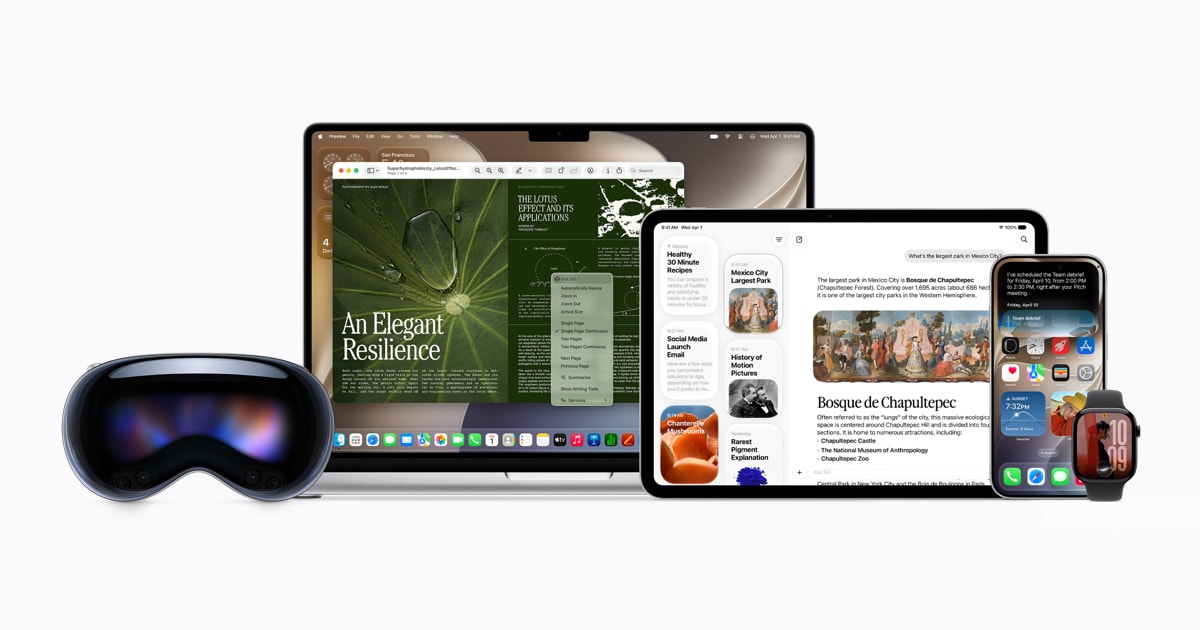
Apple introduces Siri AI, a profoundly more capable and personal assistant powered by Apple Intelligence, with personal context, world knowledge, and onscreen awareness.
Pennsylvania, USA
New App Store capabilities will give developers more flexibility to market their apps, acquire users, and manage subscriptions.
Pennsylvania, USA
At Microsoft Build 2026, Azure App Service introduced a powerful set of updates designed to help organizations accelerate their journey into AI, without increasing complexity or cost. These innovations focus on one clear business outcome: enabling teams to build, deploy, and scale AI-powered applications and agents faster, more securely, and with greater operational efficiency.
A key highlight is the new Easy AI experience, which allows existing web apps to become AI-ready with no rearchitecting required. With capabilities like built-in Model Context Protocol (MCP), developers can instantly expose app functionality as agent-ready endpoints, enabling AI agents to interact with business logic securely and seamlessly. This dramatically reduces development time, allowing teams to move from idea to intelligent application in a fraction of the usual effort.
Security and compliance are also strengthened with the general availability of Isolated v4 for Azure App Service Environments, delivering improved performance for customers that need single-tenant isolation and strong data residency guarantees. For enterprises operating in regulated industries, this ensures AI applications meet strict governance requirements without sacrificing scalability or speed.
For modernization scenarios, Managed Instance on Azure App Service simplifies the migration of legacy applications, including those with OS-level dependencies. Faster restarts, enhanced diagnostics, and AI-assisted migration workflows help organizations modernize existing systems cost-effectively—avoiding expensive rewrites while unlocking AI capabilities. Recent updates include an AI-assisted approach to migrating legacy IIS applications using a multi-agent workflow powered by MCP. Managed Instance is supported on both Premium v4 and Isolated v4, laying the foundation for a modern compute infrastructure across the board.
Operational efficiency is further enhanced through platform and CLI improvements designed for the “agent era.” From structured deployment diagnostics to optimized Python pipelines delivering faster deployments, these updates reduce friction and infrastructure overhead, lowering total cost of ownership.
Together, these innovations position Azure App Service as a future-ready platform where businesses can rapidly build intelligent, agent-driven applications securely, efficiently, and at scale.
👉 Learn more in the full announcement: Deep dive into Azure App Service Build 2026 updates
Pennsylvania, USA
Next Page of Stories