Gemini Intelligence comes with a Liquid Glass-ish visual treatment. | Image: Google
It is, once again, Gemini season. Google is announcing a host of new Gemini features during its pre-I/O Android showcase, many of which aim to help use your phone for you. You'll find Gemini in more places, like Chrome on Android, in your autofill suggestions, and all up in your apps - if you want.
Google also has a new name for us to remember, because it just can't help itself: Gemini Intelligence. It "brings the very best of Gemini to our most advanced Android devices," according to Google's director of Android experiences, Ben Greenwood. Google is bundling some existing and new Gemini features under this name, and seems to be reserving t …
AI-generated widgets are among the features coming to Android this year. | Screenshot: Google
Would it shock you to hear that Android 17 is filled with new AI-enabled features, like improved dictation and vibe-coded widgets? Fortunately, that's not all. The platform is getting non-AI updates too, from an emoji overhaul to a new screentime tool that helps you avoid distracting apps.
Google is announcing a new line of laptops coming in the fall called Googlebooks. Details are sparse for now, as the tease is just a small part of various Android announcements during Google's Android Show. But we do know this is a major new initiative in the laptop space for Google, seemingly designed to succeed Chromebooks with something more capable: a platform running a long-rumored new operating system based on a fusion of Android and ChromeOS.
That operating system, through variousleaks, has been referred to as Aluminium OS. Google isn't announcing the OS's real name or giving many details about it just yet. "We'll have more to share …
Microsoft CEO Satya Nadella, right, on stage with OpenAI CEO Sam Altman at OpenAI Dev Day in San Francisco in 2023, about two weeks before Altman’s brief ouster from the company. (GeekWire File Photo / Todd Bishop)
Former Google Cloud CEO Diane Greene was the name that drew the “strong, strong no” from Kevin Scott when the Microsoft CTO was weighing potential candidates for a revamped OpenAI board in a November 2023 text thread with Satya Nadella, Sam Altman, and Brad Smith.
William “Bing” Gordon was suggested by Scott, until Nadella noted his Amazon connections. The veteran gaming exec and Kleiner Perkins partner had been on Amazon’s board for 14 years and retained ties to the company even after stepping down.
On the stand Monday in federal court in Oakland, Nadella acknowledged that he objected to both Gordon and Greene because of their ties to companies that compete with Microsoft in AI.
Belinda Johnson, the former COO of Airbnb, got the opposite reaction, according to the unredacted text thread. Scott called her “great,” and Nadella liked the message.
Sue Desmond-Hellmann, the former CEO of the Gates Foundation, was Nadella’s own suggestion. She was later appointed to the OpenAI board.
Nadella also floated Ursula Burns, the former CEO of Xerox.
Smith, Microsoft’s president, pitched Anne Sweeney, a former president of Disney-ABC Television Group and Netflix board member, as “solid, thoughtful, calm.”
He also suggested Leslie Kilgore, the former CMO of Netflix, calling her “incredibly smart, firm, practical, while also a good listener.”
“Yep,” Scott agreed, noting that Kilgore was on the LinkedIn board (where Scott worked prior to its acquisition by Microsoft). “Very reasonable,” was his assessment.
Scott ran through a longer list: Amy Rao, co-chair of Human Rights Watch; Emilie Choi, president and COO of Coinbase; Julia Hartz, co-founder and former CEO of Eventbrite; Ciporra Herman, the former Facebook finance leader and former CFO of the San Francisco 49ers; Maynard Webb, the former CEO of LiveOps; and Jeff Weiner, the former CEO of LinkedIn.
Microsoft’s CTO even threw a wild card into the mix: himself. “I can quit for six months and do it,” he texted, “Ready to be downvoted by Satya on this one, and not really serious.”
Nadella disliked that suggestion, according to the thread.
By evening, a framework had emerged. Altman proposed a three-person board of Bret Taylor, Larry Summers, and Adam D’Angelo, with himself restored as CEO but not on the board.
Smith raised concerns about Summers. The former U.S. Treasury secretary was smart, Smith wrote, “but so mercurial. I think it’s too risky a proposition.”
Altman acknowledged as much. “id accept it given my conversations with him and where we right now,” he wrote. “it’s bullshit but i want to save this … can you guys live with it?”
Nadella’s response: “Can I call Larry tonight?” Altman gave him Summers’ cell number.
Summers served on the OpenAI board until November 2025, when he resigned following revelations about his correspondence with Jeffrey Epstein.
Following last year’s restructuring, the foundation holds a minority stake in OpenAI’s for-profit public benefit corporation, making it one of the wealthiest nonprofits in the world. Musk’s lawsuit accuses OpenAI and Microsoft of betraying the organization’s original nonprofit mission, seeking up to $134 billion in damages.
At the time of the text thread, on Nov. 21, 2023, Altman had been ousted as OpenAI CEO and was soliciting input from Microsoft’s executives on potential board members as he negotiated his return, given the Redmond company’s massive financial stake in OpenAI and the partnership between the companies.
Musk’s lawyers argue that the thread shows the degree of influence Microsoft exercised over OpenAI’s nonprofit board despite having no formal governance role. Microsoft is a named defendant in the lawsuit, which accuses the company of aiding and abetting OpenAI’s alleged breach of charitable trust.
Nadella has said publicly that Microsoft didn’t want a board seat. He testified Monday that the discussions were initiated by Altman and that the board could have ignored his suggestions.
In one of the most widely cited lines from his testimony, Nadella said the old board’s handling of Altman’s firing was “amateur city.” He said he never got a specific explanation beyond the public statement that Altman had not been “consistently candid.”
Asked by Musk’s attorney why none of his board suggestions came from a safety background, Nadella said he didn’t think safety was the problem. The challenge, he said, was ensuring that the OpenAI board “had the right sort of maturity to make sure that OpenAI doesn’t blow up.”
 Log in


 New features on Android 17 include an optimized Instagram experience, advanced editing tools and Adobe Premiere.
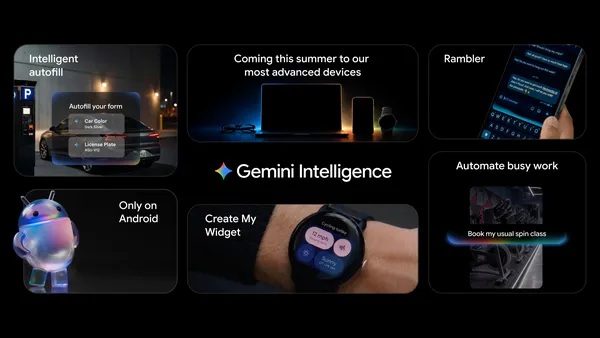 At the Android Show 2026, we introduced Gemini Intelligence, proactive new AI features on Android.


